Beemans Chewing Gum: History, Cultural Legacy, and Enduring Appeal
Beemans chewing gum occupies a distinctive place in the history of confectionery, wellness culture, and popular imagination. Unlike many modern chewing gums that focus primarily on bold flavors and instant sweetness, Beemans chewing gum emerged from a tradition that blended refreshment with perceived health benefits. Its story reflects changing consumer values, evolving scientific understanding, and the enduring appeal of simple, thoughtfully crafted products. Over time, this gum has moved beyond being merely a chewing habit and has become a cultural reference point associated with nostalgia, curiosity, and innovation. Exploring its origins, composition, cultural relevance, and lasting legacy provides insight into why it continues to capture attention decades after its introduction.
The Origins of Beemans Chewing Gum
Dr. Edwin E. Beeman and His Vision
The origins of Beemans chewing gum trace back to the late nineteenth century, a period marked by experimentation in health remedies and patent medicines. Dr. Edwin E. Beeman, a physician with an interest in digestive health, believed that certain natural substances could support bodily functions when consumed in small, controlled amounts. Inspired by the long-standing use of herbs in traditional medicine, he developed a chewing gum formula that incorporated pepsin, an enzyme associated with digestion. This innovative idea distinguished the product from other gums of the era, which were often little more than sweetened chicle.
Early Marketing and Public Reception
From the beginning, it was marketed as more than a confection. Advertisements emphasized its association with digestion and general well-being, appealing to consumers who were increasingly conscious of health. This positioning proved effective, allowing the gum to stand out in a crowded marketplace. While taste and texture mattered, the promise of a functional benefit helped establish trust and loyalty among early users. Over time, the gum gained a reputation as a refined, purposeful product rather than a casual indulgence.
Composition and Flavor Profile
Ingredients and Formulation
One of the defining characteristics of Beemans chewing gum has always been its restrained formulation. Historically, it featured a subtle blend of sweeteners and flavorings, complemented by ingredients thought to offer digestive support. Unlike modern gums that rely heavily on artificial flavor enhancers, the original formulation focused on balance and mildness. This approach contributed to its reputation as a gum suitable for prolonged chewing without overwhelming the senses.
A Distinctive Taste Experience
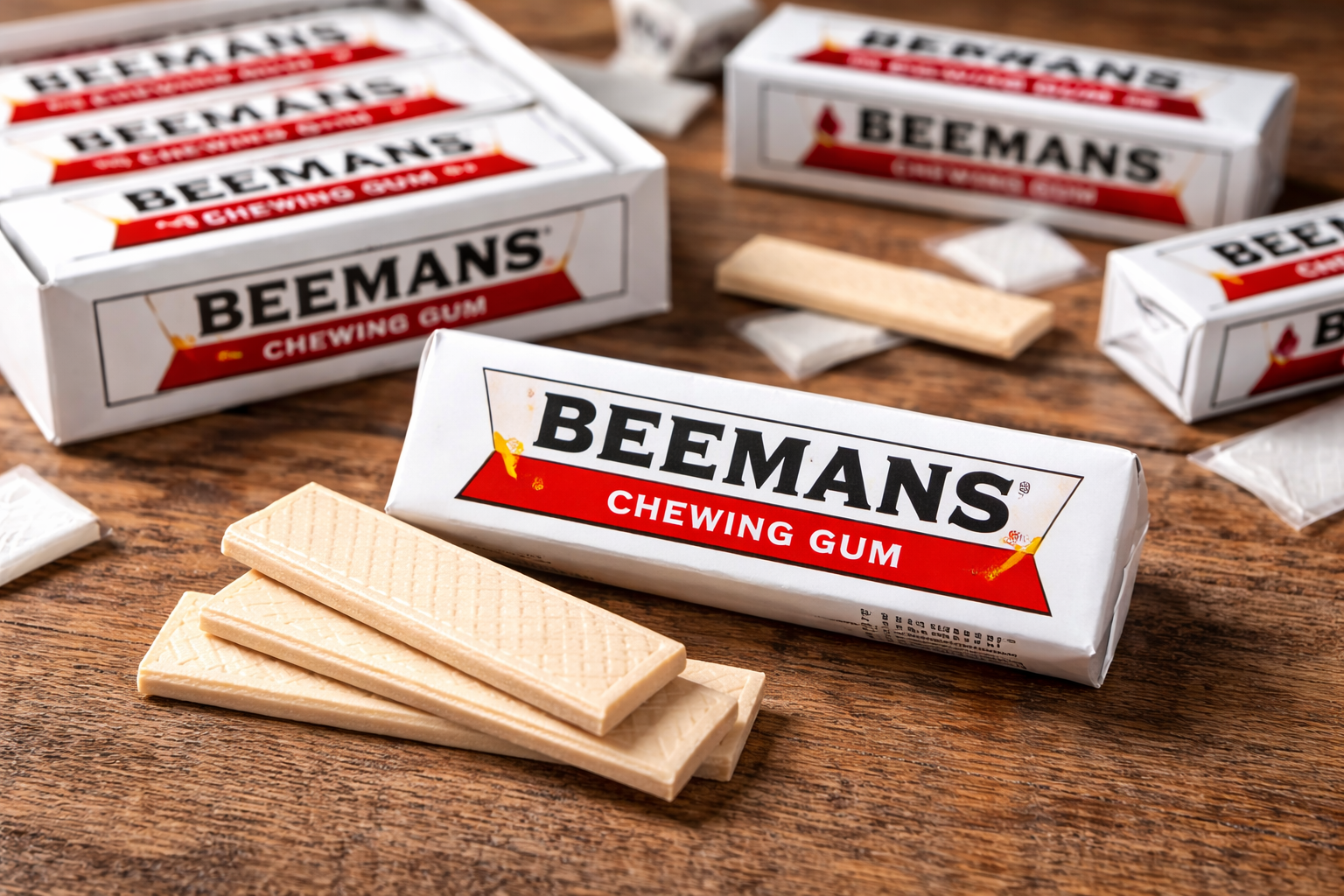
The flavor profile of Beemans chewing gum is often described as clean, smooth, and slightly herbal. It lacks the sharp intensity found in many contemporary gums, favoring instead a gentle sweetness that fades gradually. This understated taste became a hallmark of the brand, appealing to consumers who preferred subtlety over excess. The experience of chewing it was as much about texture and rhythm as it was about flavor, reinforcing its association with calm and focus.
Beemans Chewing Gum in Cultural Context
A Symbol of an Era
As decades passed, it became linked with a particular aesthetic and lifestyle. Its packaging and branding reflected a time when simplicity and elegance were valued. This association has made it a symbol of an earlier era, often evoking images of classic cinema, mid-century design, and thoughtful craftsmanship. The gum’s appearance in films and television further cemented its cultural status, introducing it to new generations through visual storytelling.
Nostalgia and Modern Rediscovery
In recent years, nostalgia has played a significant role in renewed interest in Beemans chewing gum. Consumers seeking connections to the past often gravitate toward products that feel authentic and timeless. The gum’s reputation as a discontinued or rare item has only enhanced its allure, prompting collectors and enthusiasts to seek it out. This rediscovery underscores how products rooted in genuine purpose can transcend their original market and become cultural artifacts.
The Role of Health Perception
Digestive Associations and Consumer Trust
The early emphasis on digestive benefits shaped how consumers perceived Beemans chewing gum. While modern science has refined understanding of digestion and enzymes, the idea that chewing could stimulate saliva production and aid comfort remains relevant. The gum’s association with health was never aggressive or exaggerated; instead, it relied on subtle messaging that encouraged mindful consumption. This approach fostered a sense of trust that many brands strive to replicate today.
Shifting Standards and Regulatory Changes
As food and health regulations evolved, products like Beemans chewing gum faced new standards for claims and labeling. These changes influenced how such gums were marketed and, in some cases, whether they remained in production. The transition from medicinal framing to purely recreational consumption reflects broader shifts in consumer protection and scientific rigor. Understanding this context helps explain both the challenges and the enduring respect associated with the brand.
Branding, Design, and Identity
Packaging as Communication
The packaging of Beemans chewing gum played a crucial role in conveying its identity. Clean lines, muted colors, and clear typography communicated reliability and sophistication. This visual language aligned with the brand’s emphasis on quality and restraint. Even today, images of its packaging evoke a sense of trust and familiarity, demonstrating the power of thoughtful design in shaping consumer perception.
Brand Longevity and Recognition
Despite periods of limited availability, Beemans chewing gum has maintained a strong presence in public memory. This longevity speaks to the effectiveness of its branding and the emotional connections it fostered. Recognition extends beyond those who regularly consumed it; many people are aware of the name through cultural references and shared stories. Such recognition is a testament to the brand’s lasting impact.
Beemans Chewing Gum in Popular Media
Film and Television Appearances
Appearances in popular media have played a significant role in sustaining interest in Beemans chewing gum. When characters are shown chewing it, the gum often serves as a subtle symbol of intellect, calmness, or individuality. These associations reinforce the brand’s image as thoughtful and distinctive. Media exposure has introduced the gum to audiences who may never have encountered it otherwise.
Influence on Public Perception
Media portrayals can shape how products are perceived long after their original release. In the case of Beemans chewing gum, such portrayals have emphasized its uniqueness and mystique. This influence extends beyond entertainment, affecting how consumers discuss and remember the product. The gum becomes part of a larger narrative that blends fiction, history, and personal experience.
Collectibility and Modern Interest
Scarcity and Demand
The relative scarcity of Beemans chewing gum has contributed to its status as a collectible item. Enthusiasts value unopened packs and original packaging, viewing them as tangible links to the past. This demand reflects broader trends in collecting vintage consumer goods, where everyday items gain significance through rarity and storytelling.
Online Communities and Discussions
The digital age has enabled fans of Beemans chewing gum to connect and share information. Online forums, social media groups, and blogs host discussions about its history, flavor, and availability. These communities keep the legacy alive, ensuring that knowledge about the gum continues to circulate. Such engagement demonstrates how digital platforms can preserve interest in discontinued or niche products.
Comparisons with Modern Chewing Gums
Flavor Intensity and Formulation
Modern chewing gums often prioritize strong flavors, long-lasting sweetness, and functional additives such as caffeine or vitamins. In contrast, Beemans chewing gum represents a more restrained philosophy. This difference highlights changing consumer preferences and technological advancements in food science. Comparing the two approaches reveals how product goals have shifted over time.
Consumer Expectations and Experience
Today’s consumers often expect immediate sensory impact and clear functional claims. Beemans chewing gum offered a slower, more contemplative experience. While this may seem understated by contemporary standards, it aligns with growing interest in mindfulness and simplicity. Revisiting such products can inspire reflection on what consumers truly value in everyday habits.
The Enduring Legacy of Beemans Chewing Gum
Lessons for Modern Brands
The story of Beemans chewing gum offers valuable lessons for modern brands seeking longevity. Authenticity, clarity of purpose, and respect for consumers can create lasting impressions. Rather than chasing trends, the brand focused on delivering a consistent experience grounded in its founding principles. This approach allowed it to remain relevant long after its peak years.
Cultural and Historical Significance
Beyond its role as a chewing gum, Beemans chewing gum holds cultural and historical significance. It represents a moment when consumer goods were closely tied to personal well-being and trust in craftsmanship. Studying its legacy provides insight into broader social and economic trends, making it a subject of interest for historians and enthusiasts alike.
Conclusion
Beemans chewing gum stands as a remarkable example of how a simple product can achieve lasting influence through thoughtful design, purposeful formulation, and cultural resonance. From its origins under the guidance of Dr. Edwin E. Beeman to its status as a nostalgic icon, the gum’s journey reflects changing attitudes toward health, consumption, and authenticity. Its subtle flavor, restrained branding, and association with well-being set it apart in a market often driven by excess. Even today, interest in chewing gum endures, fueled by collectors, media references, and consumers seeking meaningful connections to the past. Ultimately, its legacy reminds us that products rooted in sincerity and balance can leave an impression far greater than their modest form suggests.