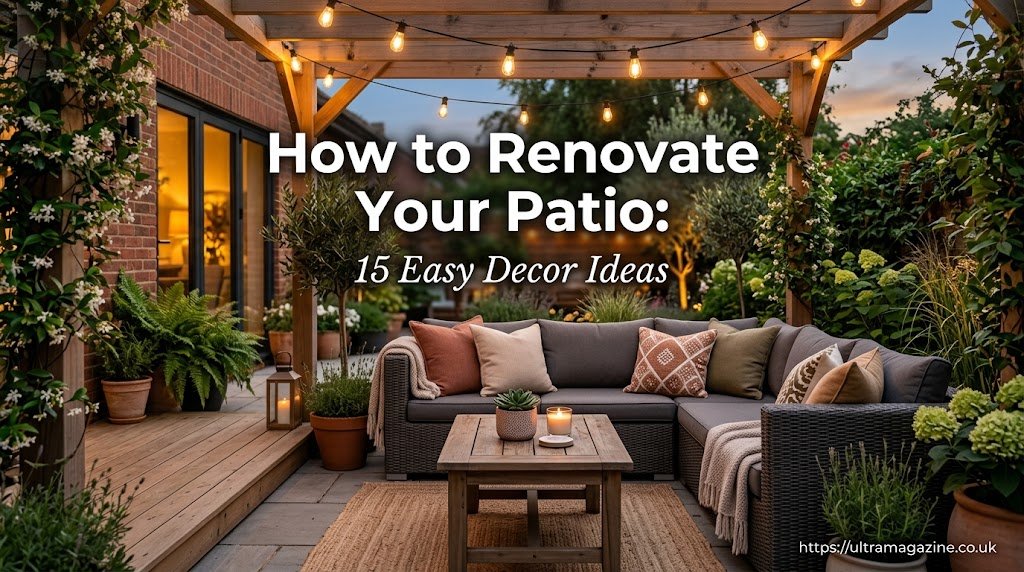
How to Renovate Your Patio: 15 Easy Decor Ideas
A patio can become one of the most enjoyable areas of a home, whether it is used for morning coffee, family gatherings, outdoor meals, or relaxing after a long day. However, an outdated or empty patio may not feel as inviting as it could. Fortunately, a complete transformation does not always require a major construction project.
If you are wondering how to renovate your patio, the key is to focus on practical improvements that make the space more comfortable, attractive, and functional. From refreshing the flooring to adding plants, lighting, furniture, and decorative accessories, small changes can create a noticeable difference.
Here are 15 easy patio renovation and decor ideas to help transform your outdoor space.
1. Start With a Patio Renovation Plan
Before buying furniture or decorations, decide what you want your renovated patio to achieve. Think about how you normally use the space and what is currently missing.
For example, a patio designed for entertaining may need a dining table and additional seating, while a relaxing patio may benefit more from comfortable chairs, soft lighting, and greenery.
Measure the available space and make a simple plan for furniture placement. This can help prevent overcrowding and make the finished patio easier to use.
2. Set a Realistic Budget
A patio makeover can be inexpensive or more extensive depending on the materials and improvements involved. Setting a budget before starting can help keep the renovation under control.
Divide the budget between important areas such as:
- Furniture
- Flooring
- Lighting
- Plants
- Outdoor rugs
- Decorative accessories
- Maintenance and repairs
If the budget is limited, prioritize improvements that have the biggest visual and practical impact.
3. Refresh the Patio Flooring
Old or damaged flooring can make an entire patio look dated. Refreshing the floor is therefore one of the most effective patio renovation ideas.
Depending on the existing surface, options may include outdoor tiles, pavers, stone, concrete finishes, or a fresh coat of suitable exterior paint.
For a simple makeover, thoroughly cleaning the existing surface may already make a significant difference.
4. Choose Comfortable Patio Furniture
Furniture plays an important role in the appearance and usability of an outdoor space. Choose pieces that fit the size of your patio without blocking walking areas.
Consider adding:
- Outdoor sofas
- Lounge chairs
- Dining chairs
- Compact tables
- Benches
- Ottomans
Comfort is particularly important if the patio will be used regularly. Cushions designed for outdoor use can also add color and softness.
5. Add an Outdoor Rug
An outdoor rug can help define a seating or dining area while making the patio feel more like an extension of the home.
Choose a rug made for outdoor conditions and select a pattern or color that complements the furniture. A properly sized rug can visually connect separate pieces and create a more organized appearance.
6. Improve Outdoor Lighting
Good lighting can completely change the atmosphere of a patio after sunset. It can also make the area more practical for evening gatherings.
Some popular patio lighting options include:
- String lights
- Lanterns
- Wall lights
- Solar lights
- LED accent lighting
Use different sources of light rather than relying on one bright fixture. Softer layers of lighting can create a more comfortable outdoor environment.
7. Bring in Plants and Greenery
Plants are an easy way to make a patio feel fresh and inviting. They can also introduce natural colors and textures into an otherwise plain space.
Depending on your climate and the amount of sunlight available, consider using potted plants, hanging planters, herbs, shrubs, or small trees.
If you do not have much time for maintenance, choose outdoor plants that are suitable for your local growing conditions and require less care.
8. Create a Comfortable Seating Zone
Instead of placing furniture randomly around the patio, create a dedicated seating zone.
Position chairs and sofas so that people can comfortably talk to each other. A small coffee table in the center can provide a convenient place for drinks, books, or decorative items.
For smaller patios, multifunctional furniture can save valuable space.
9. Add Privacy
Privacy can make an outdoor area feel more comfortable, particularly when the patio is close to neighboring properties.
Depending on the design of your home, you could use:
- Outdoor privacy screens
- Tall plants
- Trellises
- Curtains
- Decorative fencing
The goal is to create separation without making the patio feel closed in.
10. Use Outdoor Cushions and Textiles
Textiles are an easy way to update patio decor without replacing all the furniture.
Add cushions, throws, and other outdoor-friendly fabrics in colors that complement the surrounding environment. Neutral shades can create a calm appearance, while brighter colors can make the patio feel more energetic.
Make sure fabrics are appropriate for outdoor use and store removable items properly when severe weather is expected.
11. Create a Small Outdoor Dining Area
If you enjoy eating outside, consider turning part of your patio into a dining zone.
A compact table with comfortable chairs can provide a dedicated place for breakfast, lunch, or evening meals. On a small patio, a foldable or extendable table can provide flexibility.
Keep the dining area close enough to the house for convenient access to the kitchen.
12. Add Decorative Accessories
Small accessories can give a renovated patio more personality. Consider adding carefully selected pieces such as:
- Lanterns
- Planters
- Decorative trays
- Outdoor artwork
- Sculptures
- Weather-resistant ornaments
Avoid adding too many items. A few coordinated accessories usually create a cleaner and more attractive result than excessive decoration.
13. Add Shade for Hot Days
A patio can be difficult to enjoy during particularly sunny weather. Adding shade can make the space more comfortable while also protecting furniture from excessive sunlight.
Depending on the available space, consider an umbrella, pergola, shade sail, or retractable awning.
Choose a solution that fits the patio’s size and complements the overall design.
14. Add a Focal Point
Every well-designed patio can benefit from a feature that immediately attracts attention.
A focal point could be:
- A fire pit
- A statement planter
- A decorative wall
- An outdoor fireplace
- A water feature
- A large piece of outdoor artwork
The focal point does not have to be expensive. Even a simple feature can give the patio a stronger sense of design.
15. Keep the Design Easy to Maintain
A beautiful patio should also be practical. Choose materials, furniture, and decorations that can handle the outdoor environment and are relatively easy to maintain.
Regularly clean the flooring, wash outdoor cushions according to their care instructions, remove fallen leaves, and inspect furniture for signs of damage.
Good maintenance helps protect the investment you make during the renovation and keeps the patio looking attractive for longer.
How to Renovate Your Patio on a Small Budget
A patio renovation does not necessarily require a large budget. Start with simple improvements that can make an immediate difference.
Clean the existing floor, rearrange furniture, add a few plants, introduce outdoor lighting, and use cushions or an outdoor rug to refresh the appearance.
Another useful approach is to renovate the patio in stages. Instead of purchasing everything at once, focus on one area at a time. This allows you to improve the space while spreading the cost over time.
Common Patio Renovation Mistakes to Avoid
When planning a patio makeover, a few common mistakes can reduce the quality of the finished space.
Choosing Furniture That Is Too Large
Oversized furniture can make a small patio feel crowded. Always consider the available floor space before purchasing large pieces.
Ignoring the Weather
Outdoor furniture and decorations need to withstand local weather conditions. Select appropriate materials and follow the manufacturer’s maintenance recommendations.
Using Too Many Decorations
Too many accessories can make the patio look cluttered. Choose a consistent design and leave enough open space for movement.
Forgetting Lighting
A patio may look attractive during the day but become difficult to use at night without adequate lighting. Include lighting in the renovation plan from the beginning.
Final Thoughts
Learning how to renovate your patio does not have to mean completely rebuilding the space. Simple improvements such as comfortable furniture, fresh flooring, outdoor lighting, plants, rugs, privacy features, and decorative accessories can make a major difference.
The best patio makeover is one that matches the way the space will actually be used. Start with the most important improvements, work within your budget, and choose durable materials that suit your outdoor environment. With thoughtful planning, even a basic patio can become a comfortable and stylish extension of the home.
FAQs
How much does it cost to renovate a patio?
The cost varies depending on the size of the patio, materials, furniture, and improvements involved. A simple decor refresh can cost much less than replacing flooring or making structural changes.
What is the easiest way to update a patio?
Cleaning the existing space, rearranging furniture, adding plants, outdoor lighting, cushions, and an outdoor rug are some of the easiest ways to give a patio a fresh appearance.
How can I make a small patio look bigger?
Use appropriately sized furniture, keep walking areas open, choose a simple color scheme, and avoid excessive decoration. Vertical plants and wall-mounted lighting can also help use the available space efficiently.
What should I put on my patio?
Useful patio additions can include comfortable seating, a small table, outdoor lighting, plants, an outdoor rug, cushions, and weather-resistant decorative accessories.
How often should a patio be maintained?
Basic cleaning should be done regularly, while deeper maintenance depends on the flooring, furniture, plants, and local weather conditions. Following the care instructions for each material can help extend its lifespan.