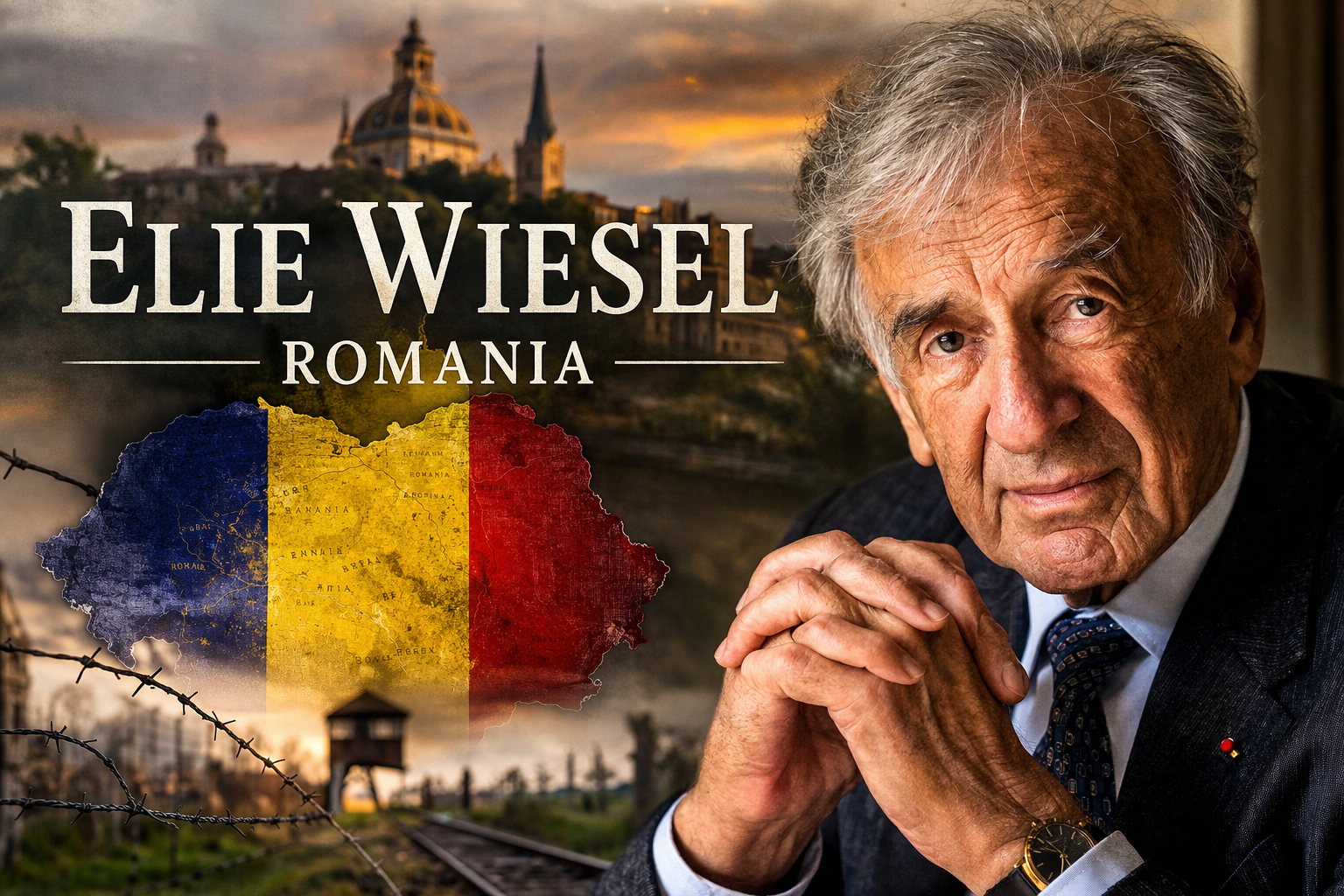
Elie Wiesel Romania: Roots, Memory, and the Shaping of a Voice
The story of Elie Wiesel cannot be understood without tracing his origins to Romania, a land that profoundly shaped his early life, identity, and later literary voice. Known globally as a Nobel Peace Prize laureate and a moral witness to the Holocaust, Wiesel carried the memories of his Romanian hometown throughout his life. His experiences in Romania, particularly during a time of rising antisemitism and political turmoil, laid the emotional and philosophical foundation for his writing. Exploring the connection between Elie Wiesel Romania reveals not only the roots of a remarkable individual but also the broader historical and cultural context that influenced his work.
Early Life in Romania
Childhood in Sighet
Elie Wiesel was born in 1928 in Sighet, a small town located in the region of Transylvania, which was part of Romania at the time. Sighet was a vibrant multicultural community, home to Jews, Hungarians, and Romanians. Wiesel grew up in a deeply religious Jewish family, surrounded by traditions, faith, and a close-knit community that provided a strong sense of belonging.
His father, Shlomo Wiesel, encouraged him to engage with the modern world, while his mother and grandfather instilled in him a strong devotion to religious study. This dual influence shaped Wiesel’s early intellectual curiosity. Romania, in this context, was not merely a geographic location but a cultural and spiritual environment that nurtured his formative years.
Cultural and Religious Influences
Romania’s Jewish communities had rich traditions, and Sighet was no exception. Wiesel spent much of his childhood immersed in the study of religious texts, particularly the Talmud and Kabbalah. These early experiences later influenced the philosophical depth and spiritual questioning evident in his writings.
Romania during the interwar period was a place of contrasts. While Jewish communities thrived culturally, antisemitism was gradually intensifying. These tensions would soon escalate, altering the course of Wiesel’s life and leaving an indelible mark on his identity.
Romania During World War II
Political Shifts and Rising Antisemitism
The late 1930s and early 1940s marked a turbulent period in Romania’s history. The country underwent significant political changes, including alliances with Nazi Germany. As a result, antisemitic policies became increasingly severe. Jewish citizens faced restrictions, discrimination, and violence.
For young Elie Wiesel, these changes transformed everyday life into a landscape of fear and uncertainty. The once-familiar streets of Sighet became a place where Jewish families were marginalized and threatened.
Deportation and the Holocaust
In 1944, when Wiesel was just fifteen years old, his life took a devastating turn. Romanian authorities, in collaboration with Nazi forces, deported the Jewish population of Sighet to concentration camps. Wiesel and his family were among those forcibly removed.
He was sent to Auschwitz and later to Buchenwald, where he endured unimaginable suffering. These experiences became the central theme of his later work, most famously in his memoir Night. While the horrors occurred in Nazi camps, the journey began in Romania, making the country a crucial part of his Holocaust narrative.
The Lasting Impact of Romania on Wiesel’s Work
Memory and Identity
Romania remained a powerful symbol in Wiesel’s memory. His writings often return to Sighet, not just as a physical place but as a representation of lost innocence and shattered community. The contrast between his peaceful childhood in Romania and the brutality of the Holocaust underscores the emotional weight of his storytelling.
Wiesel’s Romanian roots also influenced his sense of identity. Even after emigrating and becoming a global figure, he never detached himself from his origins. Instead, he used his background as a lens through which to examine broader human questions about suffering, faith, and resilience.
Literary Themes and Style
Wiesel’s literary style reflects the influence of his early life in Romania. His writing combines simplicity with profound philosophical depth, often rooted in the oral storytelling traditions of Eastern European Jewish communities. Themes of exile, memory, and moral responsibility are central to his work.
Romania, in this sense, served as both the beginning of his story and a recurring motif throughout his career. His experiences there provided the emotional and intellectual foundation for his lifelong commitment to bearing witness.
Romania’s Recognition of Elie Wiesel
Post-War Reflections and Acknowledgment
In the years following World War II, Romania underwent significant political and social transformations. The country eventually began to confront its role in the Holocaust, including the deportation of Jewish citizens from regions like Transylvania.
Elie Wiesel played a crucial role in encouraging this process of reflection. His voice, as a survivor and moral authority, helped bring attention to historical truths that had long been overlooked or denied.
The Elie Wiesel National Institute
Romania honored Wiesel’s legacy by establishing the Elie Wiesel National Institute for the Study of the Holocaust in Romania. This institution focuses on research, education, and the preservation of Holocaust memory. It serves as a testament to Wiesel’s enduring connection to his homeland and his commitment to ensuring that history is neither forgotten nor repeated.
The institute also reflects Romania’s broader efforts to acknowledge its past and promote awareness about the Holocaust. Through education and public discourse, it continues the work that Wiesel dedicated his life to.
The Broader Historical Context
Romania’s Role in the Holocaust
Understanding the connection between Elie Wiesel Romania requires an examination of the country’s role during the Holocaust. Romania, under the leadership of Ion Antonescu, was responsible for the persecution and death of hundreds of thousands of Jews.
This historical reality adds complexity to Wiesel’s relationship with his homeland. While Romania was the place of his birth and early life, it was also the starting point of his suffering. This duality is reflected in his writings, which often grapple with themes of belonging and betrayal.
The Importance of Remembrance
Wiesel believed that remembering the past was essential for building a more just future. His connection to Romania reinforced this belief, as he witnessed firsthand how quickly a society could descend into hatred and violence.
By speaking out about his experiences, Wiesel not only preserved his own story but also honored the memory of those who did not survive. His work serves as a reminder of the importance of confronting history with honesty and compassion.
Legacy and Continuing Influence
A Global Voice Rooted in Romania
Although Elie Wiesel became an international figure, his Romanian origins remained central to his identity. His journey from a small town in Transylvania to the global stage illustrates the enduring impact of early experiences on a person’s life and work.
Wiesel’s legacy extends beyond literature. He became a symbol of moral courage, advocating for human rights and speaking out against injustice around the world. Yet, at the heart of his message was the memory of his Romanian childhood and the lessons it taught him.
Lessons for Future Generations
The story of Elie Wiesel Romania offers valuable lessons for future generations. It highlights the importance of cultural identity, the dangers of intolerance, and the power of memory. By understanding this connection, readers can gain deeper insight into Wiesel’s work and the historical events that shaped it.
Education plays a crucial role in preserving these lessons. Institutions, educators, and individuals must continue to engage with history in meaningful ways, ensuring that the voices of survivors like Wiesel are not forgotten.
Conclusion
The relationship between Elie Wiesel Romania is a story of origins, loss, and enduring memory. From his early years in Sighet to his experiences during the Holocaust, Romania played a defining role in shaping his life and work. It was the place where his identity was formed, where his community thrived, and where his journey into suffering began.
Through his writings and advocacy, Wiesel transformed personal tragedy into a universal message about humanity, responsibility, and remembrance. His connection to Romania remains an essential part of this narrative, offering insight into the historical and cultural forces that influenced his voice.
Ultimately, the story of Elie Wiesel and Romania is not just about the past. It is a call to remember, to learn, and to act with compassion in the face of injustice. By reflecting on this connection, we honor not only Wiesel’s legacy but also the countless lives that shaped his story and continue to inspire the world today.