Spitbank Fort in the Solent: From Victorian Defense to Luxury Landmark
Spitbank Fort in the Solent is an extraordinary piece of British maritime history that has captured the imagination of historians, military enthusiasts, and travelers alike. Situated in the waters between Portsmouth and the Isle of Wight, this Victorian-era fort exemplifies the ingenuity and strategic planning of coastal defense in the 19th century. Originally designed to protect the vital naval dockyards of Portsmouth from potential seaborne attacks, Spitbank Fort has since evolved from a military stronghold into a unique luxury destination, blending history with modern hospitality.
This article explores the history, architectural significance, military role, and modern adaptation of Spitbank Fort in the Solent. By examining its past and present, readers gain insight into why this fort remains an iconic landmark on the southern coast of England.
Historical Background
Construction and Purpose
Spitbank Fort was constructed in the 1860s as part of the Palmerston Forts, a series of coastal defenses commissioned during the tenure of Prime Minister Lord Palmerston. The forts were intended to address growing fears of French naval aggression and to protect key maritime assets in the Solent and Portsmouth Harbour.
Built using concrete and granite, Spitbank Fort was designed to house heavy artillery and a garrison capable of defending the surrounding waters. Its circular structure allowed for optimal fields of fire, and its elevated gun emplacements enabled defenders to repel ships approaching the harbor. The fort’s construction reflected both military innovation and the era’s architectural preferences for durable, imposing coastal fortifications.
Role in British Naval Defense
Throughout the late 19th and early 20th centuries, Spitbank Fort played a critical role in the defense of Portsmouth, one of Britain’s most important naval hubs. While it never saw direct combat, its presence served as a deterrent to potential aggressors. The fort was equipped with state-of-the-art artillery and communication systems for the period, enabling rapid coordination with nearby forts and the naval fleet.
Spitbank Fort’s strategic location in the Solent allowed it to control access to the harbor and monitor maritime traffic, demonstrating the importance of coastal fortifications in Britain’s defense strategy during the Victorian era.
Architectural Features
Design and Layout
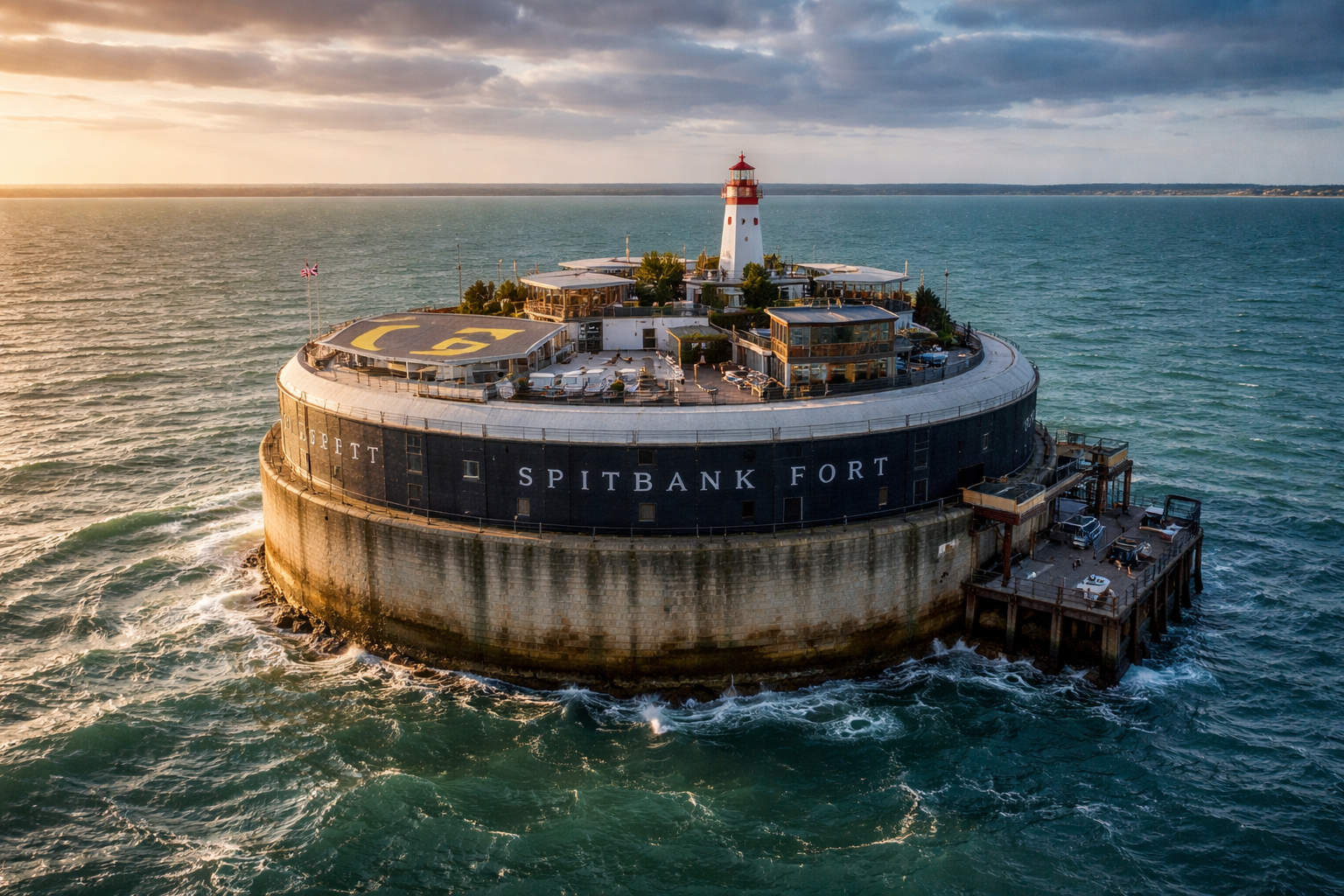
Spitbank Fort is circular in design, with thick masonry walls capable of withstanding naval bombardment. The fort consists of multiple levels, including a gun deck, living quarters for soldiers, storage areas for ammunition, and operational rooms for commanding officers. Its compact layout was carefully planned to maximize defensive capabilities while providing functional living and working spaces for the garrison.
The fort’s surface is dominated by gun emplacements and observation posts, while the interior features corridors, barracks, and essential facilities arranged efficiently to support daily operations. Its self-contained design allowed the fort to operate independently for extended periods, even under siege conditions.
Artillery and Defensive Systems
The fort was originally armed with heavy muzzle-loading cannons designed to target enemy ships attempting to enter the Solent. These guns were mounted on rotating platforms to allow wide-ranging coverage, giving the fort a formidable presence against naval threats. Over time, the artillery was upgraded to accommodate rifled breech-loading guns, reflecting advances in military technology.
In addition to artillery, Spitbank Fort incorporated defensive features such as thick walls, narrow windows for rifle fire, and fortified access points to prevent enemy landings. These elements combined to make the fort both a symbol of power and a practical defensive installation.
Transition to Modern Use
Decline of Military Significance
By the mid-20th century, advances in naval warfare, including aircraft and long-range missiles, rendered coastal forts like Spitbank largely obsolete. The fort was eventually decommissioned and fell into a period of disuse. However, its unique structure and historical significance made it an ideal candidate for preservation and adaptive reuse.
Conversion into a Luxury Hotel
In recent years, Spitbank Fort has undergone a remarkable transformation from a military installation into a boutique hotel and private event venue. Today, visitors can experience luxurious accommodations within the historic walls, including elegantly designed rooms, fine dining options, and panoramic views of the Solent.
The conversion carefully preserved the fort’s original architectural features, allowing guests to appreciate its historical significance while enjoying modern comforts. This adaptive reuse has turned Spitbank Fort into one of the most distinctive hospitality experiences in the UK.
Tourism and Cultural Impact
The fort now attracts tourists, history enthusiasts, and maritime aficionados from around the world. Visitors can explore the fort’s historic gun emplacements, learn about its role in coastal defense, and enjoy recreational activities such as boat trips, guided tours, and overnight stays. This fusion of history and luxury has elevated Spitbank Fort as a cultural and leisure destination while maintaining its historical integrity.
Preservation and Heritage
Maintaining Structural Integrity
Preserving Spitbank Fort in the Solent requires ongoing maintenance and restoration. The fort’s exposure to harsh marine conditions, including saltwater corrosion and tidal fluctuations, presents significant challenges. Conservation efforts focus on repairing masonry, reinforcing structural elements, and protecting historic features from environmental damage.
These measures ensure that the fort remains safe for visitors while retaining its original character, highlighting the importance of preserving historical military architecture in coastal environments.
Educational and Historical Value
Beyond its role as a hotel, Spitbank Fort serves as an educational resource. Guided tours, exhibitions, and interpretive materials provide insights into the fort’s construction, military strategy, and daily life for the soldiers who once lived there. By offering historical context, the fort educates visitors on Britain’s maritime defense history and the technological innovations of the Victorian era.
Challenges and Opportunities
Balancing Tourism and Preservation
One of the primary challenges in managing Spitbank Fort is balancing tourism with the preservation of its historic fabric. High visitor numbers, events, and modern amenities must be integrated carefully to prevent damage to the structure. Sustainable management practices, including controlled access and regular maintenance, are essential to ensure the fort’s long-term viability.
Potential for Cultural Engagement
The fort presents opportunities for cultural engagement beyond tourism. Hosting exhibitions, educational programs, and historical reenactments can enhance public understanding of Britain’s maritime heritage. Collaborations with schools, universities, and heritage organizations further strengthen the fort’s role as a living historical site.
Conclusion
Spitbank Fort in the Solent represents a remarkable journey from Victorian military innovation to modern luxury and cultural significance. Its historical importance as a coastal defense installation, combined with its architectural ingenuity, makes it a unique landmark in British maritime history. Today, the fort continues to captivate visitors through its transformation into a luxury destination, offering a rare opportunity to experience history firsthand while enjoying modern amenities.
By preserving its structure, educating the public, and adapting to contemporary use, Spitbank Fort exemplifies how heritage sites can maintain their relevance and appeal. Whether viewed as a testament to Britain’s coastal defense strategy or as a one-of-a-kind hospitality experience, Spitbank Fort remains an enduring symbol of ingenuity, resilience, and historical fascination in the Solent region.