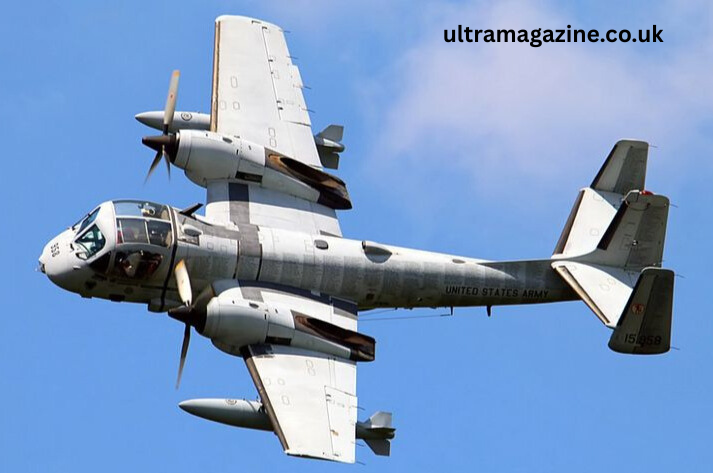
Grumman OV 1D Mohawk: A Comprehensive Insight into a Legendary Military Reconnaissance Aircraft
Military aviation history is filled with aircraft that defined entire eras of tactical innovation, and the Grumman OV 1D Mohawk stands as one of the most distinctive examples. Designed specifically for battlefield reconnaissance and surveillance, this aircraft played a crucial role during some of the most complex military operations of the twentieth century. Its unique design, adaptability, and mission-focused engineering allowed it to operate where many conventional aircraft could not. Even decades after its introduction, the Grumman OV 1D Mohawk remains a subject of interest for aviation historians, defense analysts, and enthusiasts who value purpose-built military technology.
Origins and Development of the Mohawk Program
Strategic Needs Behind the Design
During the late 1950s, the United States Army identified a growing need for a dedicated tactical reconnaissance aircraft that could operate close to the battlefield. Existing platforms lacked the flexibility, short takeoff capability, and sensor integration required for real-time intelligence gathering. This operational gap led to the creation of a new aircraft program focused on low-altitude surveillance and rapid deployment.
Grumman Aerospace Corporation responded with a design that emphasized ruggedness, versatility, and advanced reconnaissance capabilities. The result was the OV-1 Mohawk series, an aircraft specifically tailored to meet the Army’s demanding requirements.
Evolution Toward the OV-1D Variant
The initial versions of the Mohawk underwent continuous refinement based on combat feedback and technological advancements. Over time, the platform evolved to support more sophisticated sensor systems and improved mission endurance. The OV-1D variant emerged as the most advanced and capable model in the series, incorporating enhanced avionics, infrared imaging systems, and electronic surveillance equipment.
This evolution transformed the aircraft into a multi-role reconnaissance platform capable of operating effectively in both day and night conditions.
Design Characteristics and Engineering Excellence
Distinctive Airframe and Configuration
The Grumman OV 1D Mohawk features a twin-engine, high-wing configuration that supports stability at low altitudes and slow speeds. Its robust landing gear allows operations from unprepared airstrips, making it highly effective in forward-deployed environments. The aircraft’s twin-tail design contributes to improved control and visibility, which is essential during reconnaissance missions.
Every aspect of the airframe reflects its battlefield role, prioritizing survivability and operational flexibility over speed or aesthetic appeal.
Powerplant and Performance Capabilities
Powered by twin turboprop engines, the aircraft delivers reliable performance across a wide range of conditions. The engine configuration provides redundancy, ensuring mission continuation even if one engine encounters issues. This reliability proved especially valuable during combat operations in challenging terrains.
While the Mohawk does not compete with jet aircraft in terms of speed, its endurance, maneuverability, and fuel efficiency make it ideal for prolonged surveillance missions.
Advanced Reconnaissance and Surveillance Systems
Sensor Integration and Intelligence Gathering
One of the defining strengths of the Grumman OV 1D Mohawk lies in its advanced sensor suite. The aircraft integrates infrared imaging systems, side-looking airborne radar, and photographic reconnaissance equipment. These systems enable real-time intelligence collection, even in low-visibility conditions.
The ability to gather detailed battlefield data provided commanders with actionable insights, improving decision-making and operational outcomes.
Night and All-Weather Capabilities
The OV-1D variant significantly improved night operations through enhanced infrared technology. This capability allowed reconnaissance missions to continue regardless of lighting conditions, giving military forces a critical advantage. All-weather functionality further expanded its operational relevance, ensuring consistent performance in diverse climates.
These features made the aircraft a reliable asset for continuous surveillance during extended campaigns.
Operational Role in Military Conflicts
Deployment During the Vietnam War
The Grumman OV 1D Mohawk gained prominence during the Vietnam War, where it served as a vital intelligence platform. The aircraft conducted low-level reconnaissance missions over hostile territory, identifying enemy movements, supply routes, and concealed positions.
Its ability to operate close to the battlefield provided real-time intelligence that directly influenced ground operations. The aircraft’s performance in Vietnam solidified its reputation as an indispensable reconnaissance asset.
Cold War Surveillance Missions
Beyond Southeast Asia, the Mohawk played a strategic role during the Cold War. The aircraft supported NATO operations and monitored sensitive regions where rapid intelligence gathering was essential. Its advanced sensors allowed for effective observation without direct engagement, aligning with broader surveillance strategies of the era.
These missions highlighted the aircraft’s adaptability across different geopolitical contexts.
Crew Configuration and Operational Efficiency
Two-Person Crew Design
The cockpit of the Grumman OV 1D Mohawk accommodates a two-person crew consisting of a pilot and a systems operator. This configuration ensures effective workload distribution during complex reconnaissance missions. While the pilot focuses on aircraft control and navigation, the systems operator manages sensors and data collection.
This collaborative approach enhances mission accuracy and operational efficiency, particularly during high-stress environments.
Training and Skill Requirements
Operating the OV-1D requires specialized training due to its advanced reconnaissance systems and low-altitude mission profile. Crew members must possess strong situational awareness and technical expertise to maximize the aircraft’s capabilities.
The demanding nature of these missions underscores the professionalism required to operate this unique platform.
Survivability and Defensive Considerations
Low-Altitude Tactical Advantages
The aircraft’s ability to fly at low altitudes reduces detection by enemy radar systems. This tactical advantage enhances survivability while allowing detailed observation of ground activity. Combined with its maneuverability, the Mohawk can respond quickly to threats during reconnaissance operations.
These characteristics make it particularly effective in contested environments.
Structural Durability and Redundancy
Built with combat durability in mind, the aircraft incorporates redundant systems and reinforced structures. This design approach minimizes mission risk and improves crew safety. Even under adverse conditions, the platform maintains operational reliability.
Such resilience contributed to its long service life across multiple theaters of operation.
Legacy and Historical Significance
Contribution to Military Aviation
The Grumman OV 1D Mohawk represents a milestone in military reconnaissance aviation. Its success demonstrated the value of purpose-built surveillance aircraft tailored to specific operational needs. Lessons learned from its deployment influenced the development of future reconnaissance platforms and unmanned systems.
Its impact extends beyond its service years, shaping modern intelligence-gathering strategies.
Preservation and Continued Interest
Today, preserved examples of the Mohawk can be found in aviation museums and private collections. These aircraft serve as tangible reminders of a transformative period in military aviation history. Enthusiasts and historians continue to study the platform for its innovative design and operational achievements.
The enduring interest reflects its significance within the broader context of defense technology evolution.
Comparison with Modern Reconnaissance Platforms
Manned Versus Unmanned Systems
While modern reconnaissance increasingly relies on unmanned aerial vehicles, the Mohawk highlights the advantages of manned platforms in certain scenarios. Human judgment and adaptability remain valuable assets, particularly in dynamic environments.
The aircraft’s legacy provides a useful benchmark for evaluating the strengths and limitations of contemporary surveillance systems.
Technological Progress and Enduring Lessons
Advancements in sensor miniaturization and data processing have transformed reconnaissance capabilities. However, the core principles demonstrated by the OV-1D, such as mission specialization and operational flexibility, remain relevant.
These enduring lessons continue to inform modern military aircraft design philosophies.
Conclusion
The Grumman OV 1D Mohawk stands as a testament to the effectiveness of mission-driven aircraft design. Developed to meet a specific tactical need, it delivered exceptional reconnaissance capabilities across multiple conflicts and strategic environments. Its advanced sensor integration, rugged construction, and operational versatility set new standards for battlefield intelligence gathering.
Although newer technologies have since taken its place, the legacy of this aircraft remains firmly embedded in military aviation history. The lessons learned from its service continue to influence modern reconnaissance platforms, ensuring that the contributions of the Grumman OV 1D Mohawk endure well beyond its operational lifespan.