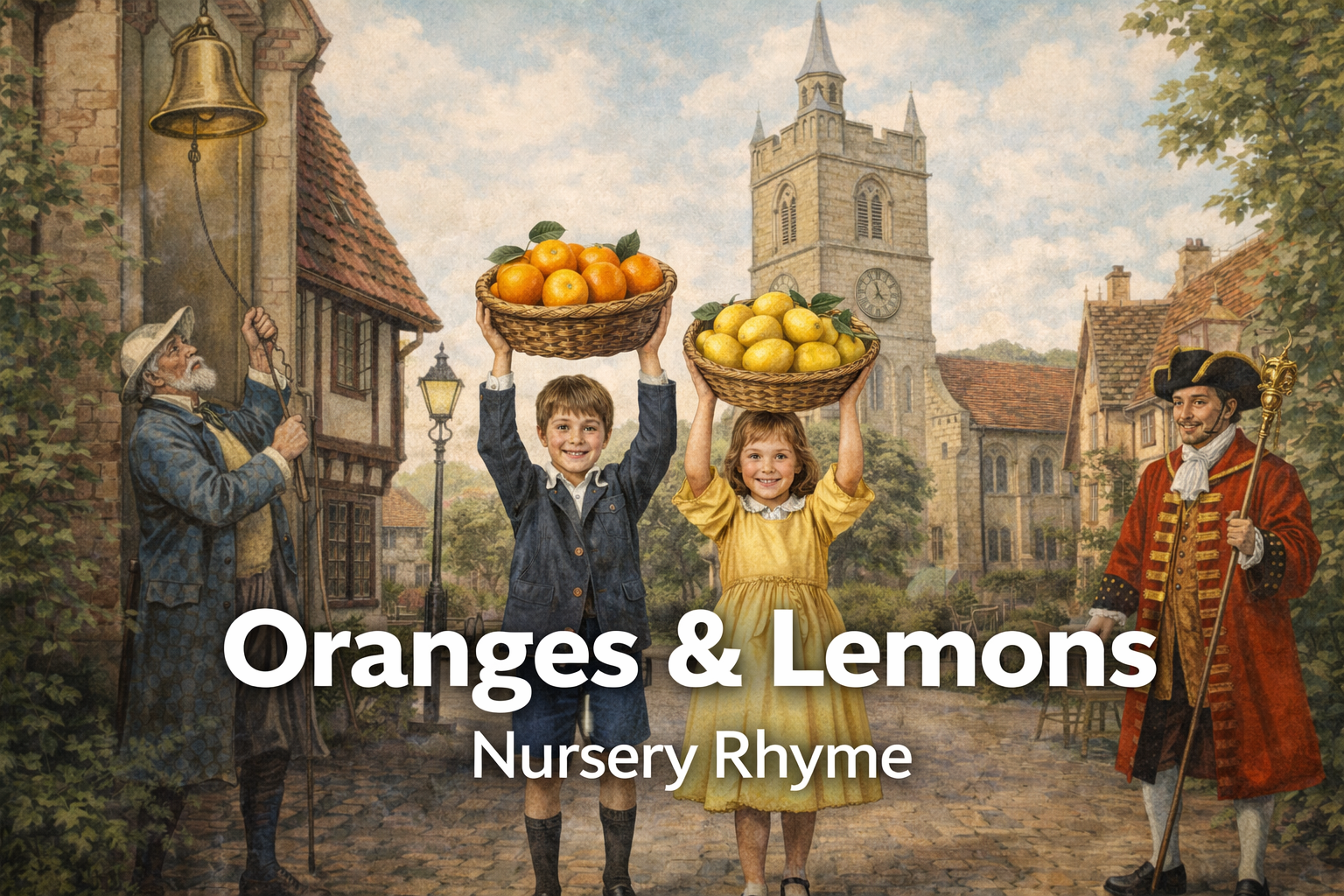
Oranges & Lemons Nursery Rhyme: History, Meaning, and Cultural Legacy
At first glance, it appears to be a simple children’s rhyme associated with playful chanting and games. However, beneath its rhythmic charm lies a complex blend of history, symbolism, and cultural memory that has fascinated scholars, educators, and parents for generations. Passed down orally long before it was formally recorded, the rhyme reflects social structures, geography, religion, and even darker historical realities of its time. Its survival into modern culture demonstrates the remarkable power of oral tradition and the way seemingly innocent verses can carry layered meanings across centuries.
This article explores the origins, structure, interpretations, and long-lasting influence of the oranges & lemons nursery rhyme. By examining its historical context and cultural significance, we can better understand why this rhyme continues to resonate in literature, education, and popular culture today.
Historical Origins of the Rhyme
Early References and Documentation
The earliest known printed version of the oranges & lemons nursery rhyme dates back to the mid-18th century, although historians agree that it existed orally long before then. It was first published in collections of English nursery rhymes, which sought to preserve traditional verses that were already familiar to children and adults alike. The rhyme’s references to specific London churches suggest that it originated in or around the city, making it a valuable artifact of urban English folklore.
London during this period was a rapidly growing metropolis shaped by trade, religion, and class divisions. The rhyme’s structure, which names churches in sequence, mirrors the physical and social landscape of the city. Each line evokes a location that would have been recognizable to listeners at the time, reinforcing the idea that nursery rhymes often served as mnemonic tools as well as entertainment.
The Role of Oral Tradition
Before widespread literacy, oral tradition played a crucial role in preserving cultural knowledge. This oral transmission allowed for variations in wording and rhythm, but the core structure remained intact. Such flexibility is one reason the rhyme survived for so long, adapting subtly to changes in language and social norms without losing its identity.
Structure and Musical Qualities
Rhythm and Repetition
The repetitive structure makes it easy to remember and recite, especially for children. This musical quality is not accidental. Nursery rhymes were designed to be engaging and accessible, helping young learners develop language skills, memory, and a sense of rhythm.
The repetition of phrases and sounds also contributes to the rhyme’s hypnotic effect. While the verses are simple, their cadence creates anticipation, drawing listeners toward the final lines. This gradual build-up is a hallmark of traditional rhymes and plays a significant role in their enduring appeal.
Call-and-Response Elements
Many interpretations of the oranges & lemons nursery rhyme emphasize its interactive nature. Historically, it was often performed as a group activity, with children responding to each line through movement or chanting. This communal aspect reinforces social bonding and highlights how nursery rhymes functioned as shared cultural experiences rather than solitary texts.
Symbolism and Interpretation
Churches as Cultural Markers
The most striking feature of the oranges & lemons nursery rhyme is its reference to various London churches. Each church is associated with a particular sound or phrase, suggesting the ringing of bells. In historical London, church bells were central to daily life, marking time, announcing events, and reinforcing the presence of religious institutions. By weaving these landmarks into the rhyme, the verse captures a soundscape that would have been deeply familiar to its original audience.
The churches also serve as symbolic markers of different neighborhoods and social classes. Some scholars argue that the rhyme subtly reflects economic divisions, as certain areas were wealthier or more influential than others. This interpretation adds a layer of social commentary to what might otherwise seem like a playful chant.
Hidden Meanings and Darker Themes
Despite its cheerful rhythm, the oranges & lemons nursery rhyme has often been associated with darker interpretations. The final lines, which traditionally involve a form of “capture” or ending gesture, have been linked to themes of punishment, debt, or even execution. While there is no definitive evidence that the rhyme was intended to convey such meanings, these interpretations highlight the complex relationship between folklore and historical reality.
It is important to note that many nursery rhymes contain elements that reflect harsh aspects of past societies. Over time, these elements became abstracted, allowing the rhyme to function as entertainment without requiring conscious awareness of its origins.
Educational Value and Child Development
Language and Cognitive Skills
From an educational perspective, the oranges & lemons nursery rhyme offers significant benefits. Its repetitive structure and clear rhythm support language acquisition, helping children recognize patterns, sounds, and vocabulary. Reciting the rhyme encourages pronunciation practice and auditory discrimination, both of which are essential components of early literacy development.
Additionally, the rhyme’s narrative progression fosters memory and sequencing skills. Children learn to anticipate what comes next, reinforcing cognitive processes that are fundamental to learning across disciplines.
Social Interaction and Play
Beyond linguistic benefits, the oranges & lemons nursery rhyme promotes social interaction. When performed as a group activity, it encourages cooperation, turn-taking, and shared enjoyment. These experiences contribute to emotional development and help children build confidence in social settings.
The physical movements often associated with the rhyme also support motor development. Simple gestures or actions synchronized with the verses enhance coordination and body awareness, making the rhyme a holistic learning tool.
Influence on Literature and Popular Culture
Literary References
Authors have drawn on its familiar lines to create atmosphere or foreshadow events, relying on readers’ preexisting knowledge of the rhyme to add depth to their narratives.
In some cases, the rhyme is employed ironically, contrasting its childlike form with darker story elements. This technique underscores the dual nature of nursery rhymes as both innocent entertainment and carriers of deeper cultural meaning.
Film, Television, and Music
Beyond literature, the oranges & lemons nursery rhyme has influenced film, television, and music. Its recognizable rhythm makes it an effective motif, particularly in scenes that aim to create tension or unease. The contrast between a familiar childhood rhyme and a serious or suspenseful context can be especially powerful, demonstrating how deeply embedded the rhyme is in collective memory.
Musicians and composers have also adapted the rhyme, incorporating its melody or lyrics into new works. These adaptations reflect the rhyme’s versatility and its ability to transcend generational boundaries.
Preservation and Modern Relevance
Nursery Rhymes in the Digital Age
In the modern era, nursery rhymes continue to play an important role, even as modes of transmission have evolved. Digital media, educational platforms, and interactive apps now present the oranges & lemons nursery rhyme to new audiences around the world. This global reach has transformed what was once a local cultural artifact into a shared international experience.
Despite technological changes, the fundamental appeal of the rhyme remains the same. Its simplicity, rhythm, and sense of tradition provide comfort and familiarity in an increasingly complex world.
Cultural Heritage and Identity
Preserving traditional rhymes like oranges & lemons is essential for maintaining cultural heritage. These verses offer insights into historical life, values, and social structures that might otherwise be forgotten. By teaching and sharing the rhyme, educators and parents contribute to the continuity of cultural identity and collective memory.
The rhyme also invites reinterpretation, allowing each generation to find new meaning within its lines. This adaptability ensures that it remains relevant without losing its historical roots.
Conclusion
The oranges & lemons nursery rhyme is far more than a simple children’s chant. It is a living piece of cultural history that reflects the social, religious, and linguistic landscape of its origins while continuing to educate and entertain modern audiences. Through its rhythmic structure, symbolic references, and enduring adaptability, the rhyme demonstrates the power of oral tradition to preserve meaning across centuries.
By examining its history, interpretations, and influence, we gain a deeper appreciation for how nursery rhymes function as both educational tools and cultural artifacts.