The Enduring Mystery of Loftus Hall in Wexford
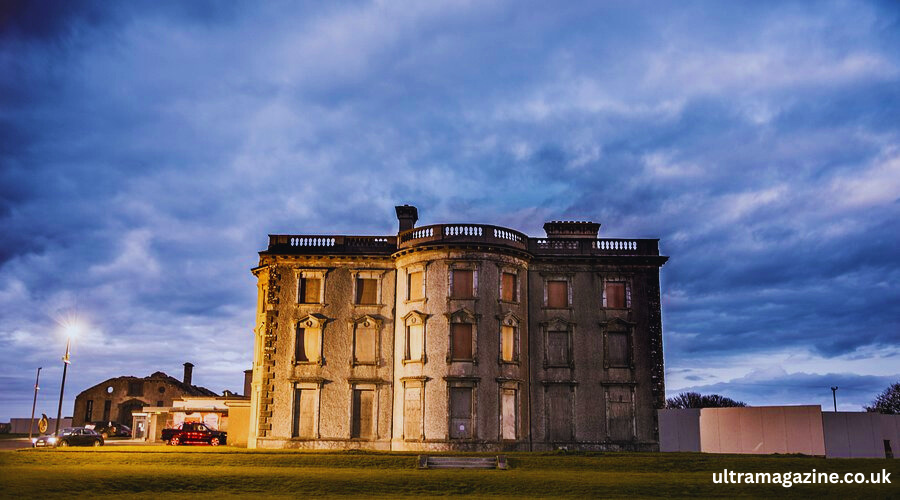
Few historic houses in Ireland have captured the public imagination quite like Loftus Hall in Wexford. Rising dramatically against the windswept landscape of the Hook Peninsula, this imposing mansion has long been associated with grandeur, tragedy, and one of the most famous ghost stories in Irish folklore. Over the centuries, it has evolved from a fortified manor to a stately country residence, and later into a symbol of mystery that continues to draw curious visitors from around the world.
The story of Loftus Hall in Wexford is not merely about architecture or myth. It reflects Ireland’s social, political, and cultural transformations. Through its walls echo tales of Norman settlers, aristocratic ambition, religious tension, and Victorian elegance. While the legend of the Devil’s visit often dominates conversation, the true history of the estate is equally compelling and far more complex than popular accounts suggest.
The Historical Origins of Loftus Hall in Wexford
Norman Beginnings on the Hook Peninsula
The origins of Loftus Hall in Wexford date back to the 12th century, when the Redmond family constructed a castle on the Hook Peninsula. This strategic location allowed them to monitor maritime activity and defend against potential invaders arriving by sea. At the time, Ireland was experiencing significant upheaval following the Norman invasion, and fortified structures like this one were vital to maintaining control over land and trade routes.
The original building bore little resemblance to the grand mansion that stands today. It functioned primarily as a defensive stronghold, with thick stone walls and limited openings designed to withstand attack. Over time, as relative stability returned to the region, the need for heavy fortification diminished. The property gradually transitioned from a military outpost into a residence befitting a wealthy landowning family.
The Rise of the Loftus Family
In the 17th century, ownership passed to the Loftus family, who would eventually lend their name to the estate. Under their stewardship, the property underwent significant expansion and refinement. The Loftus family were influential figures in Irish political and social life, and they sought to transform the old castle into a residence that reflected their status.
By the 18th century, the structure had evolved into a more elegant country house. Later renovations in the 19th century, inspired by Queen Victoria’s visit to Wexford in 1859, introduced many of the architectural features that define the building today. The house was redesigned in a striking Gothic Revival style, complete with ornate ceilings, expansive windows, and an imposing staircase that remains one of its most photographed interior features.
Architectural Grandeur and Design
Victorian Transformation
The 19th-century transformation of Loftus Hall in Wexford marked a decisive shift in its character. Rather than serving purely functional purposes, the mansion was redesigned to impress. High ceilings, intricate plasterwork, and decorative wood paneling created a sense of drama and opulence. The grand staircase, reportedly inspired by designs seen during the Victorian era, stands as a central focal point.
Large bay windows overlook the Atlantic Ocean, offering sweeping views that contrast with the building’s somber interior legends. The interplay between natural light and shadow within the halls enhances its atmospheric quality, reinforcing both its elegance and its reputation for mystery.
Gothic Revival Influence
The Gothic Revival style was particularly fashionable during the 19th century, reflecting a romantic fascination with medieval architecture. Loftus Hall embodies many of these elements, including pointed arches, elaborate detailing, and a dramatic silhouette against the sky. This aesthetic choice was not accidental. It communicated wealth, sophistication, and historical continuity at a time when the Irish landed gentry were keen to assert their cultural standing.
The mansion’s commanding presence on the Hook Peninsula makes it a landmark within County Wexford. Its location, surrounded by rugged coastline and open skies, contributes significantly to its enduring appeal.
The Legend That Shaped Its Reputation
The Devil’s Visit
No discussion of Loftus Hall in Wexford would be complete without addressing the legend that has defined its popular image. According to folklore, a mysterious stranger arrived at the house one stormy night seeking shelter. The family welcomed him, and he joined them for an evening of card games. During the game, a young woman named Anne reportedly dropped a card and bent to retrieve it. In that moment, she noticed that the stranger had cloven hooves instead of feet.
Realizing his identity, she screamed. The stranger then revealed himself as the Devil and vanished through the roof in a flash of fire, leaving a large hole in the ceiling. Anne, traumatized by the encounter, is said to have descended into madness and eventually died under tragic circumstances.
While historians regard this tale as folklore rather than fact, it has undeniably shaped the public perception of the house. The dramatic imagery of a supernatural visitor, combined with the mansion’s Gothic atmosphere, has cemented its status as one of Ireland’s most famous haunted locations.
Folklore and Cultural Impact
Irish storytelling traditions have long embraced themes of the supernatural, blending Christian beliefs with older Celtic myths. The legend associated with Loftus Hall reflects this cultural heritage. Whether viewed as a cautionary tale or a piece of imaginative folklore, the story continues to fascinate both locals and international audiences.
Over the years, the mansion has been featured in documentaries, television programs, and articles exploring Ireland’s haunted heritage. Its reputation as a paranormal hotspot has played a central role in sustaining interest in the property long after its aristocratic era ended.
Social and Political Context
The Anglo-Irish Experience
The history of Loftus Hall in Wexford is closely intertwined with the broader narrative of the Anglo-Irish ascendancy. Large estates like this one were symbols of wealth and authority during a period marked by significant social divisions. Landownership conferred power, and grand houses often served as visible representations of that influence.
However, the 19th and early 20th centuries brought profound change. Economic pressures, land reforms, and shifting political realities diminished the dominance of many aristocratic families. Like numerous Irish country houses, Loftus Hall experienced periods of decline as maintaining such a vast property became increasingly difficult.
Changing Uses Over Time
Throughout the 20th century, the mansion served various purposes. At different times, it functioned as a convent and later as a hotel. Each transformation altered the building’s interior while preserving its essential character. These adaptive uses highlight the resilience of historic structures and the ways in which they can evolve to meet new social needs.
In recent decades, renewed interest in heritage tourism has sparked efforts to preserve and restore historic estates across Ireland. Loftus Hall has benefited from this broader cultural movement, attracting visitors eager to explore its history firsthand.
Tourism and Modern Interest
A Destination for Curious Travelers
Today, Loftus Hall in Wexford stands as one of the region’s most intriguing attractions. Its blend of documented history and captivating legend offers a unique experience for visitors. Guided tours have historically provided insight into both the architectural features and the folklore that surrounds the estate.
The mansion’s location on the Hook Peninsula enhances its appeal. Travelers can combine a visit with exploration of nearby coastal scenery, historic lighthouses, and charming villages. This combination of natural beauty and cultural heritage makes the area a rewarding destination.
Preservation Challenges
Maintaining a structure of this scale presents significant challenges. Exposure to harsh coastal weather conditions requires ongoing conservation efforts. Preserving original features while ensuring structural safety demands both expertise and financial investment.
Heritage organizations and private owners alike face the delicate task of balancing authenticity with sustainability. The future of historic properties often depends on innovative management strategies that respect their past while accommodating contemporary realities.
The Psychological Power of Place
Historic houses frequently evoke strong emotional responses. In the case of Loftus Hall in Wexford, the combination of dramatic architecture and legendary narrative intensifies this effect. Visitors often describe a sense of stepping back in time, where the boundaries between history and myth blur.
Psychologists suggest that atmospheric settings can heighten suggestibility, particularly when accompanied by compelling stories. The dim lighting, creaking floors, and expansive corridors of an old mansion naturally lend themselves to imaginative interpretation. This phenomenon may partly explain why ghost stories endure even in the absence of empirical evidence.
The Broader Significance of Irish Country Houses
Loftus Hall represents a wider category of Irish country houses that once dotted the landscape. These estates played central roles in local economies, providing employment and shaping community life. Their decline in the 20th century marked the end of an era.
Yet many have found new purposes as cultural venues, museums, or tourist attractions. They serve as tangible links to Ireland’s layered past, illustrating how architecture can embody social history. In this sense, Loftus Hall in Wexford is more than a haunted house; it is a monument to centuries of transformation.
Conclusion
The enduring fascination with Loftus Hall in Wexford stems from the seamless blending of fact and folklore. Its imposing Gothic façade tells a story of ambition and adaptation, while its legendary tales capture the imagination of successive generations. Together, these elements create a narrative that is both historically grounded and richly symbolic.
As Ireland continues to celebrate and preserve its architectural heritage, properties like Loftus Hall remain vital cultural touchstones. They invite reflection on the past while offering opportunities for education and exploration in the present. Whether approached as a historic landmark, an architectural achievement, or the setting of a famous legend, Loftus Hall stands as one of Wexford’s most compelling and memorable sites.
In the end, its true power lies not solely in ghost stories or grand staircases, but in its ability to connect people with history in a vivid and lasting way.