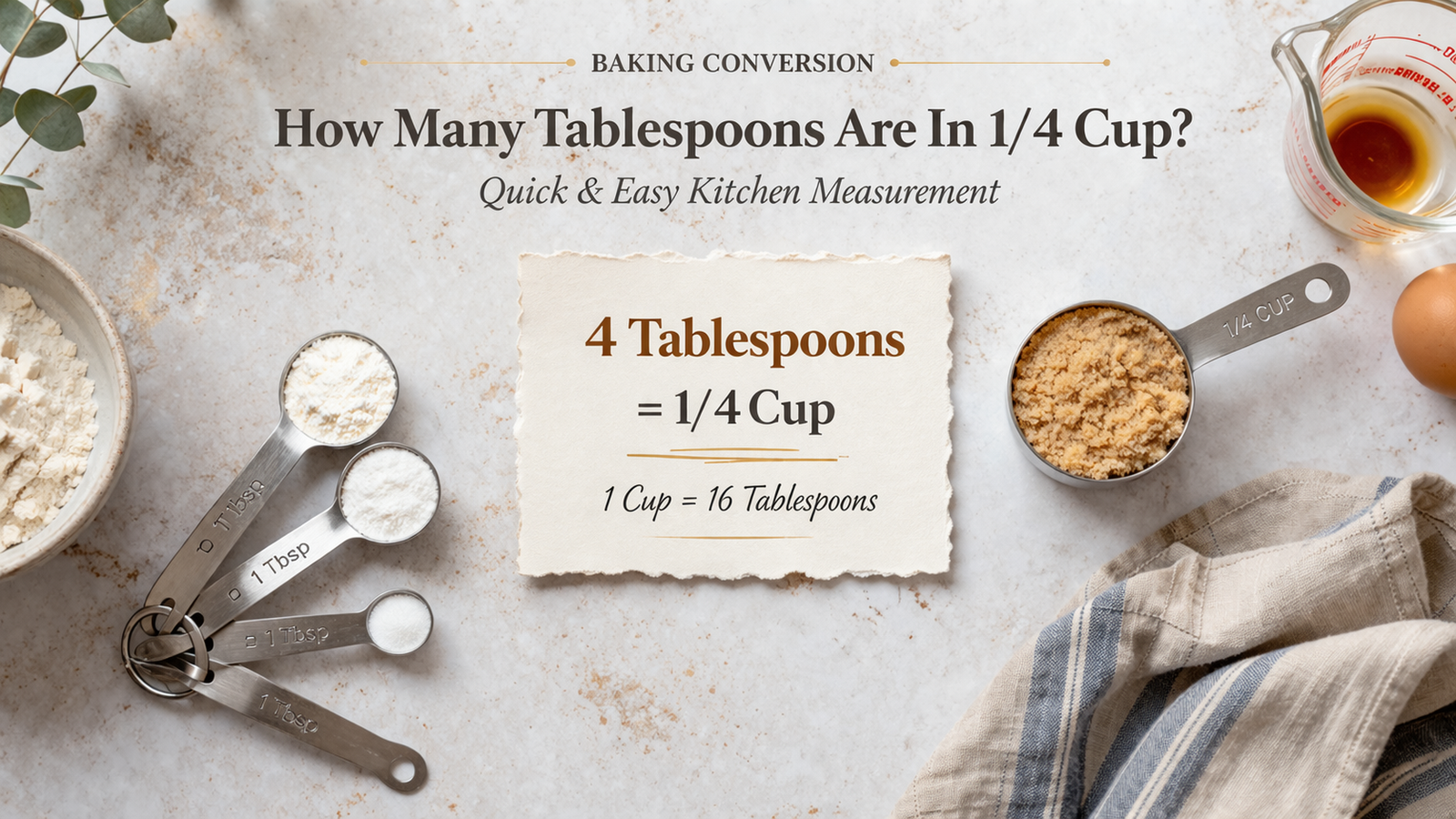
How Many Tablespoons Are in 1/4 Cup? A Complete Guide to Accurate Kitchen Measurements
Precision in the kitchen often determines the difference between a successful dish and a disappointing result. Whether you are an experienced chef or someone just beginning to explore cooking, understanding measurement conversions is essential. Among the most commonly asked questions is how many tablespoons are in 1/4 cup, a query that arises frequently in recipes across the globe. While the answer may seem simple, gaining a deeper understanding of this conversion can significantly improve your cooking accuracy and confidence. This article provides a comprehensive exploration of this measurement, its practical applications, and tips for ensuring consistency in your culinary endeavors.
Understanding Basic Kitchen Measurements
Before addressing the central question, it is important to understand the broader system of kitchen measurements. Cooking and baking rely on standardized units to ensure consistency. In many regions, particularly in the United States, volume measurements such as cups, tablespoons, and teaspoons are widely used.
A cup is a larger unit of volume, typically used for measuring liquids and bulk ingredients. Tablespoons and teaspoons, on the other hand, are smaller units designed for more precise quantities. These units are interconnected, forming a structured system that allows for easy conversion between measurements.
The Relationship Between Cups and Tablespoons
To understand how many tablespoons are in 1/4 cup, one must first recognize the standard conversion. In the U.S. measurement system, one cup equals 16 tablespoons. This foundational relationship makes it easy to calculate smaller portions.
By dividing 16 tablespoons by 4, we find that:
1/4 cup equals 4 tablespoons
This straightforward calculation is essential knowledge for anyone working in the kitchen, as it allows for quick adjustments to recipes without the need for specialized tools.
Why Accurate Measurements Matter
Accurate measurements are particularly crucial in baking, where the balance of ingredients directly affects the final outcome. Unlike cooking, which often allows for flexibility, baking requires precision to achieve the desired texture, flavor, and appearance.
Impact on Flavor and Texture
Using the correct number of tablespoons ensures that ingredients are properly balanced. Too much or too little of a key component can alter the taste and consistency of a dish. For example, adding extra liquid can make a batter too thin, while insufficient fat may result in a dry texture.
Consistency in Results
Consistency is another important factor. When you know exactly how many tablespoons are in 1/4 cup, you can replicate recipes with confidence. This is especially valuable when preparing dishes for special occasions or professional settings.
Practical Applications in Everyday Cooking
Understanding this conversion is not limited to baking. It has practical applications in everyday cooking, from preparing sauces to mixing beverages.
Adjusting Recipes
Knowing that 1/4 cup equals 4 tablespoons allows you to adjust quantities بسهولة and accurately. For instance, if a recipe calls for 1/2 cup, you can easily convert it to 8 tablespoons if a measuring cup is not available.
Substituting Measuring Tools
There are times when you may not have access to a full set of measuring cups. In such cases, tablespoons can serve as a reliable alternative. By using the correct conversion, you can maintain accuracy even with limited tools.
Reducing Waste
Precise measurements also help reduce food waste. By using the exact amount required, you avoid over-preparing ingredients and ensure efficient use of resources.
Differences in Measurement Systems
While the U.S. system is widely used, it is not the only system in practice. Other countries may use metric measurements, which rely on milliliters and liters.
Converting to Metric Units
In the metric system, 1/4 cup is approximately equal to 60 milliliters. This conversion is useful when working with international recipes or using metric-based tools.
Variations to Be Aware Of
It is important to note that slight variations can exist between measurement systems. For example, a tablespoon in some countries may differ slightly in volume from the U.S. standard. Being aware of these differences helps prevent inaccuracies.
Tips for Accurate Measuring
Even when you know how many tablespoons are in 1/4 cup, proper measuring techniques are essential for achieving accurate results.
Use the Right Tools
Investing in a good set of measuring cups and spoons is one of the best ways to ensure precision. These tools are designed to provide consistent measurements and are widely available.
Level Off Ingredients
When measuring dry ingredients, it is important to level off the top using a flat edge. This ensures that you are not adding more than the required amount.
Measure Liquids at Eye Level
For liquid ingredients, place the measuring cup on a flat surface and check the measurement at eye level. This helps avoid overfilling or underfilling.
Avoid Packing Unless Specified
Some ingredients, such as brown sugar, may need to be packed into the measuring spoon. However, most ingredients should be measured loosely unless the recipe specifies otherwise.
Common Mistakes to Avoid
Despite the simplicity of the conversion, mistakes can still occur. Being aware of common errors can help you avoid them.
Confusing Tablespoons and Teaspoons
One of the most frequent mistakes is confusing tablespoons with teaspoons. Since a tablespoon is larger, this error can significantly affect the outcome of a recipe.
Estimating Instead of Measuring
While it may be tempting to estimate quantities, this approach can lead to inconsistent results. Taking the time to measure accurately is always worthwhile.
Ignoring Recipe Instructions
Recipes often include specific instructions for measuring ingredients. Ignoring these guidelines can result in inaccuracies, even if you know the correct conversions.
Enhancing Your Cooking Skills
Mastering basic conversions like how many tablespoons are in 1/4 cup is a stepping stone to becoming a more confident and skilled cook. It allows you to experiment with recipes, make adjustments, and understand the science behind cooking.
Building Confidence in the Kitchen
When you are familiar with measurement conversions, you can approach recipes with greater confidence. This reduces stress and makes the cooking process more enjoyable.
Encouraging Creativity
Accurate measurements provide a solid foundation for creativity. Once you understand the basics, you can begin to modify recipes and create your own dishes with confidence.
Conclusion
Understanding how many tablespoons are in 1/4 cup is a fundamental aspect of cooking that every home cook and professional chef should know. With the simple conversion of 1/4 cup equaling 4 tablespoons, you gain the ability to measure ingredients accurately, adjust recipes بسهولة, and achieve consistent results.
Beyond the basic calculation, this knowledge enhances your overall cooking experience. It improves precision, reduces errors, and allows for greater flexibility in the kitchen. By applying the tips and techniques discussed in this article, you can ensure that your measurements are always accurate and reliable.
As you continue to develop your culinary skills, remember that even the smallest details can make a significant difference. Mastering essential conversions is not just about following recipes—it is about understanding the art and science of cooking, ultimately leading to more successful and enjoyable outcomes.