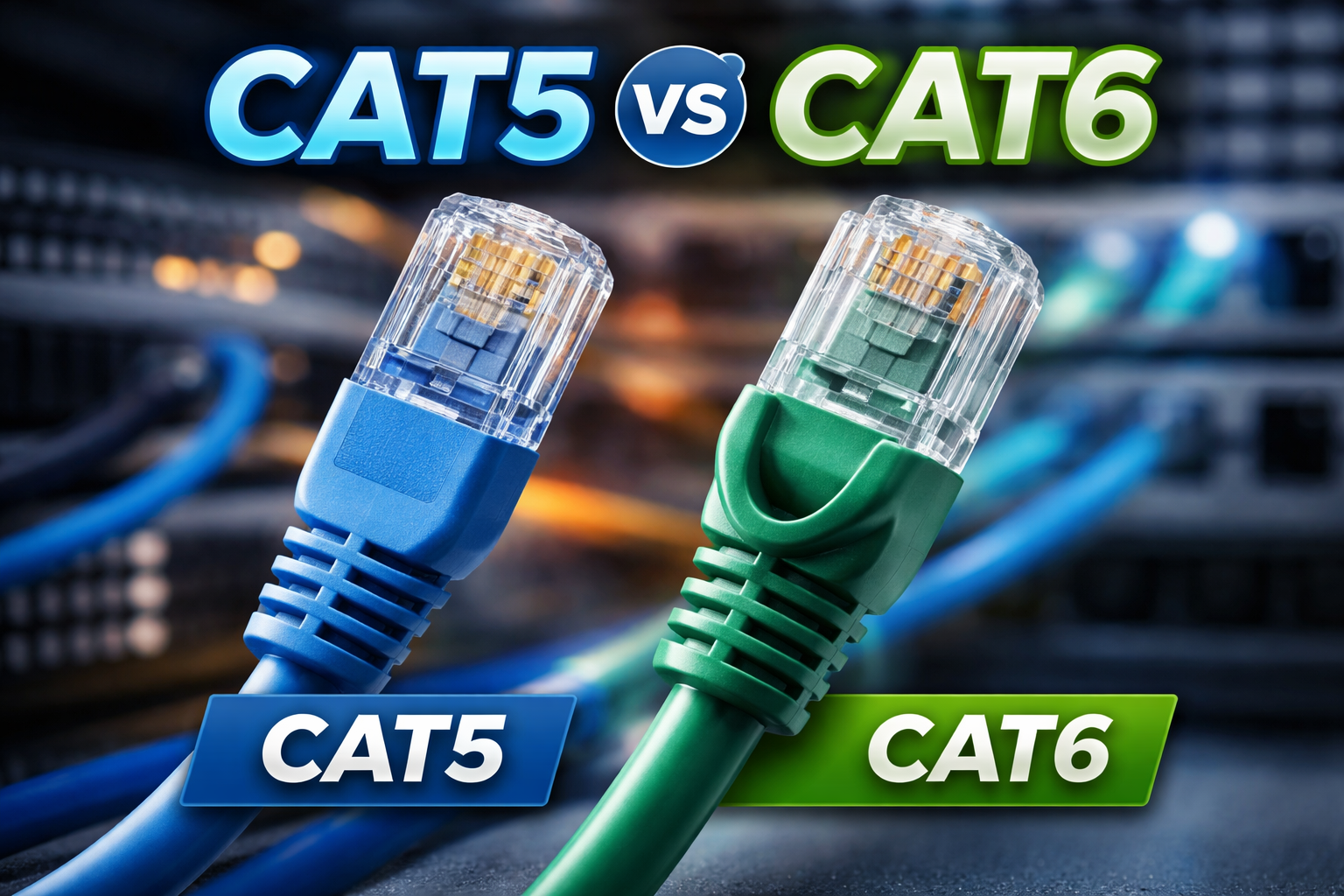
Cat5 vs Cat6: Understanding the Key Differences for Better Network Performance
In today’s digitally driven environment, reliable and high-speed internet connectivity has become a necessity rather than a luxury. Whether in homes, offices, or data centers, the quality of network infrastructure plays a crucial role in determining performance. Among the essential components of this infrastructure are Ethernet cables, which facilitate data transmission between devices. A common comparison that arises in this context is cat5 vs cat6, as users seek to understand which cable type best suits their needs.
Choosing the right cable is not merely a technical decision; it directly impacts speed, efficiency, and long-term scalability. While both Cat5 and Cat6 cables serve similar purposes, they differ significantly in terms of performance, design, and application. This article provides a detailed and structured analysis of these two cable types, helping readers make informed decisions based on their specific requirements.
Understanding Ethernet Cable Categories
These categories define factors such as data transfer speed, bandwidth, and construction quality. The comparison of cat5 vs cat6 revolves around two generations of these standardized cables, each designed to meet evolving technological demands.
What Is Cat5?
Category 5, commonly referred to as Cat5, is an older standard that was widely used for network installations. It supports data transfer speeds of up to 100 Mbps and operates at a bandwidth of 100 MHz. Although it has largely been replaced by newer standards, it may still be found in older networks.
What Is Cat6?
Category 6, or Cat6, represents a more advanced standard designed to support higher speeds and improved performance. It can handle data transfer rates of up to 1 Gbps over longer distances and even higher speeds over shorter ranges. With a bandwidth of up to 250 MHz, it offers significantly enhanced capabilities compared to its predecessor.
Key Differences Between Cat5 and Cat6
Understanding the differences between these two cable types is essential when evaluating cat5 vs cat6 for practical use.
Speed and Performance
One of the most notable differences lies in speed. Cat5 cables are limited to slower data transfer rates, making them less suitable for modern applications that require high bandwidth. In contrast, Cat6 cables provide faster speeds, enabling smoother streaming, gaming, and data-intensive tasks.
Bandwidth Capacity
Bandwidth determines the amount of data that can be transmitted over a network within a given time. Cat6 cables offer more than double the bandwidth of Cat5 cables, making them better equipped to handle high-demand environments.
Crosstalk and Interference
Crosstalk refers to interference between adjacent wires within a cable. Cat6 cables are designed with improved insulation and tighter twists, which reduce crosstalk and enhance signal quality. This results in more reliable data transmission compared to Cat5 cables.
Construction and Design
The internal structure of Cat6 cables is more sophisticated. They often include a central separator that isolates wire pairs, minimizing interference. Cat5 cables lack this feature, which contributes to their lower performance.
Advantages of Cat5 Cables
Despite being outdated, Cat5 cables still offer certain advantages in specific scenarios.
Cost-Effectiveness
Cat5 cables are generally less expensive than Cat6 cables. For basic networking needs, such as simple internet browsing or low-bandwidth applications, they may still be a viable option.
Adequate for Legacy Systems
Older systems that do not require high-speed connectivity can function effectively with Cat5 cables. In such cases, upgrading may not be necessary.
Simplicity
The simpler design of Cat5 cables makes them easier to install and manage in certain environments.
Advantages of Cat6 Cables
When comparing cat5 vs cat6, the benefits of Cat6 cables become more apparent in modern applications.
Higher Data Transfer Speeds
Cat6 cables support significantly higher speeds, making them ideal for contemporary networking requirements.
Improved Reliability
Enhanced construction reduces interference, ensuring consistent and stable connections.
Future-Proofing
Investing in Cat6 cables helps prepare networks for future technological advancements. As data demands continue to grow, having a higher-capacity infrastructure becomes increasingly important.
Use Cases for Each Cable Type
Selecting between Cat5 and Cat6 depends largely on the intended use.
Home Networks
For basic home networks with minimal data usage, Cat5 cables may suffice. However, households with multiple devices, streaming services, and smart home systems will benefit from Cat6 cables.
Office Environments
In office settings, where data transfer and communication are critical, Cat6 cables provide the reliability and speed needed for efficient operations.
Data Centers
Data centers require high-performance infrastructure to manage large volumes of data. Cat6 cables are better suited for these environments due to their superior capabilities.
Installation Considerations
When evaluating cat5 vs cat6, installation factors should also be taken into account.
Cable Length
Both cable types have distance limitations, but performance degradation is more noticeable in Cat5 cables over longer distances.
Compatibility
Cat6 cables are backward compatible with older standards, allowing them to work with existing network equipment.
Cost vs Performance
While Cat6 cables are more expensive, their long-term benefits often outweigh the initial cost, especially in high-demand environments.
Common Misconceptions
There are several misconceptions surrounding cat5 vs cat6 that can lead to confusion.
“Cat5 Is Completely Obsolete”
While Cat5 is outdated, it is not entirely obsolete. It can still serve basic networking needs in certain situations.
“Cat6 Always Guarantees Maximum Speed”
The performance of Cat6 cables depends on other factors such as network hardware and configuration. Simply upgrading the cable does not automatically ensure maximum speed.
“All Ethernet Cables Are the Same”
Different categories are designed for different purposes.
Future Trends in Networking
The comparison of cat5 vs cat6 reflects broader trends in networking technology.
Increasing Data Demands
As digital activities continue to grow, the need for higher bandwidth and faster speeds will drive the adoption of advanced cable standards.
Emergence of New Categories
Newer cable categories, such as Cat7 and Cat8, are already entering the market, offering even greater performance.
Integration with Smart Technologies
The rise of smart homes and IoT devices will further increase the demand for reliable and high-speed networking solutions.
Conclusion
The debate of cat5 vs cat6 ultimately comes down to performance requirements, budget, and future planning. While Cat5 cables may still serve basic needs, they fall short in meeting the demands of modern applications. Cat6 cables, with their higher speeds, improved reliability, and greater bandwidth, offer a more robust solution for today’s networking challenges.
Choosing the right cable is an investment in the efficiency and longevity of your network. By understanding the differences and evaluating your specific needs, you can make an informed decision that ensures optimal performance. As technology continues to advance, prioritizing quality infrastructure will remain essential for staying connected in an increasingly digital world.