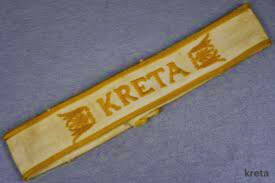
WW2 German Kreta Campaign Logo: Symbolism, History, and Visual Identity of the Battle of Crete
The Second World War generated a vast visual language of symbols, insignia, and emblems that communicated power, identity, and ideology. Among these, the ww2 german kreta campaign logo occupies a particular place in historical inquiry because it is linked to one of the most daring and controversial operations of the conflict: the German invasion of Crete in 1941. Often referred to as the Battle of Crete or Unternehmen Merkur (Operation Mercury), the campaign marked the first large-scale airborne invasion in military history. While historians frequently focus on tactics and outcomes, the visual elements associated with the campaign also deserve attention, as they reveal how military identity, propaganda, and remembrance were shaped during wartime.
This article explores the historical background of the German Crete campaign, the symbolic culture of Nazi Germany, and how campaign logos, insignia, and emblems were used to represent the operation. By examining these elements carefully, we gain deeper insight into how visual identity functioned as both a practical military tool and a psychological instrument during World War II.
Historical Context of the German Crete Campaign
The German invasion of Crete began in May 1941, following rapid Axis victories in mainland Greece. Crete’s strategic importance was undeniable. The island controlled key sea lanes in the eastern Mediterranean and provided airfields that could threaten Axis operations in North Africa. For Germany, securing Crete meant extending its operational reach and denying the Allies a crucial base.
Operation Mercury relied heavily on airborne forces, particularly the elite Fallschirmjäger units. These paratroopers were trained not only for combat effectiveness but also for symbolic distinction. Their identity as an elite force was reinforced through uniforms, insignia, and campaign-specific markers. Within this environment, visual symbols associated with the campaign emerged as part of a broader military culture.
The Role of Symbols and Logos in Nazi Germany
Nazi Germany placed extraordinary emphasis on symbols. From the national flag to unit insignia, visual elements were designed to foster unity, discipline, and ideological loyalty. Campaign-related symbols were no exception. While not every military operation had an officially standardized logo in the modern branding sense, many campaigns were associated with distinctive insignia, cuff titles, badges, or unofficial emblems created by units in the field.
The concept behind a campaign symbol was multifaceted. It served to commemorate participation, reinforce group identity, and communicate prestige. In the case of Crete, the airborne nature of the operation added further symbolic weight. Paratroopers were portrayed as modern warriors, combining technological innovation with personal bravery, and any visual representation linked to the campaign reflected this narrative.
Understanding the Concept of a Campaign Logo
When discussing the ww2 german kreta campaign logo, it is important to clarify terminology. During World War II, “logos” as understood today were rare. Instead, military forces used insignia, badges, and heraldic symbols. These could function similarly to logos by providing instant recognition and meaning.
For the Crete campaign, symbolism often drew from traditional military imagery, such as eagles, wreaths, and weapons, combined with geographic or operational references. These designs were typically simple, reproducible, and easily identifiable, ensuring they could be worn on uniforms, printed in documents, or reproduced in propaganda material.
Airborne Forces and Their Visual Identity
The Fallschirmjäger were central to the Crete operation, and their visual identity was carefully cultivated. Their standard insignia included the paratrooper badge featuring an eagle diving downward, clutching a wreath. This image conveyed aggression, speed, and dominance from the air, qualities that were directly relevant to the Crete invasion.
In connection with the campaign, additional identifiers were sometimes used. Cuff titles bearing the word “Kreta” became one of the most recognizable commemorative items associated with the operation. While not a logo in a corporate sense, such items functioned as campaign markers and contributed to what modern observers might describe as a campaign logo system.
Symbolism Associated with Crete
Crete itself held symbolic significance. Historically, the island was associated with ancient civilizations, resilience, and strategic control. German military symbolism sometimes incorporated references to geography or mythology to elevate the perceived importance of an operation. In the context of the Crete campaign, symbols emphasized conquest, airborne supremacy, and sacrifice.
Any visual representation linked to the campaign was also shaped by propaganda needs. German wartime media portrayed the invasion as a bold and innovative victory, downplaying the heavy casualties suffered by airborne troops. Emblems and insignia reinforced this narrative by highlighting heroism rather than cost.
Propaganda and Public Perception
Propaganda played a crucial role in shaping how the German public understood the Crete campaign. Posters, newsreels, and illustrated magazines often featured stylized imagery of paratroopers descending from the sky, accompanied by national symbols. While these images were not always formal logos, they contributed to a consistent visual theme associated with the campaign.
The use of campaign-related imagery helped transform a complex and costly military operation into a symbol of daring and technical superiority. In this sense, the visual language surrounding the campaign functioned similarly to a modern logo, condensing meaning into a recognizable form.
The Aftermath of the Crete Campaign
Despite initial success, the German victory in Crete came at a high price. Casualties among the airborne forces were severe, leading Adolf Hitler to limit future large-scale airborne operations. This outcome affected how the campaign was remembered and symbolized in later years.
Post-campaign insignia and commemorative items took on an added layer of meaning. They were no longer just markers of victory but also reminders of sacrifice. This dual significance influenced how symbols related to the campaign were perceived both during and after the war.
Collectors and Historical Interest
In the postwar period, items associated with the Crete campaign became objects of historical interest. Collectors and museums study insignia, cuff titles, and related artifacts to understand how the German military constructed identity and memory. The idea of a ww2 german kreta campaign logo often emerges in this context as researchers attempt to categorize and interpret these visual elements.
It is essential, however, to approach such artifacts critically. They must be understood within their historical and ideological framework, rather than admired purely for design. Studying these symbols provides insight into how authoritarian regimes use visual culture to influence perception and behavior.
Ethical Considerations in Studying Wartime Symbols
Any discussion of Nazi-era symbols requires careful ethical consideration. While historical analysis is legitimate and necessary, it is important to avoid glorification. Campaign-related imagery should be examined as evidence of how visual communication supported military and ideological goals, not as endorsements of those goals.
Educational institutions and historians emphasize contextualization, ensuring that symbols are presented alongside accurate accounts of the human cost of war. In this way, the study of campaign logos and insignia contributes to historical understanding rather than myth-making.
Modern Interpretations and Misconceptions
In the digital age, references to historical campaign logos can sometimes be misleading. Modern recreations or simplified graphics may circulate online without proper context, creating the impression that a single, official logo existed for the Crete campaign. In reality, the visual identity of the operation was fragmented, consisting of official insignia, unit-specific emblems, and propaganda imagery.
Understanding this complexity helps correct misconceptions and encourages a more nuanced view of how wartime symbols functioned. The concept of a unified campaign logo is largely a retrospective interpretation shaped by modern branding sensibilities.
Conclusion
The ww2 german kreta campaign logo is best understood not as a single, standardized design but as a collection of symbols, insignia, and visual themes associated with the German invasion of Crete in 1941. These elements reflected the priorities of Nazi Germany, emphasizing airborne prowess, unity, and ideological strength while masking the campaign’s heavy human cost.
By examining the historical context, symbolism, and ethical dimensions of these visual markers, we gain valuable insight into how military identity and propaganda intersected during World War II. Such analysis deepens our understanding of the past and reminds us that even seemingly simple symbols can carry complex and often troubling meanings.