The Hahnemann Monument: History, Meaning, and Its Place in American Medical Heritage
Public monuments often serve as silent narrators of history, preserving ideas and individuals that once reshaped intellectual landscapes. Among the lesser-known yet culturally significant memorials in the United States stands the hahnemann monument, a structure that reflects the intersection of medical philosophy, civic identity, and artistic expression. More than a commemorative statue, it represents a period when alternative medical thought held notable influence in American society. Its presence in the nation’s capital invites reflection on scientific debate, professional diversity, and the evolving nature of healthcare.
This article explores the historical, cultural, and architectural importance of the monument, examining why it was built, what it symbolizes, and how it continues to resonate today. Through this lens, the memorial emerges not merely as a tribute to an individual, but as a marker of a broader intellectual movement that shaped nineteenth-century medicine.
Historical Context of the Monument
The Man Behind the Memorial
The monument honors Samuel Hahnemann, a German physician best known as the founder of homeopathy. Born in the eighteenth century, Hahnemann challenged the prevailing medical practices of his era, which often relied on aggressive and harmful treatments. His alternative approach emphasized minimal dosing and the concept that substances causing symptoms in healthy individuals could, in diluted form, treat similar symptoms in the sick.
Hahnemann’s ideas spread rapidly across Europe and later reached the United States, where they found a receptive audience. By the mid-nineteenth century, homeopathy had become an organized and influential medical movement, particularly among educated urban populations seeking gentler forms of care.
Homeopathy in Nineteenth-Century America
In the United States, homeopathy gained prominence at a time when conventional medicine was still developing standardized practices. Homeopathic practitioners established medical schools, journals, and professional organizations. One of the most influential bodies supporting the movement was the American Institute of Homeopathy, founded in 1844 and recognized as the first national medical organization in the country.
This institutional support created the conditions necessary for a public monument. By the late nineteenth century, homeopathy had sufficient cultural standing to justify a permanent memorial in the nation’s capital, reflecting both professional pride and public recognition.
The Decision to Build the Monument
Motivation and Funding
The idea for the hahnemann monument originated within the American homeopathic community, which sought to honor its founder and legitimize its contributions to medicine. Funding for the project came largely from homeopathic physicians and supporters across the United States, demonstrating the movement’s organizational strength.
The decision to place the monument in Washington was symbolic. As the seat of national governance, the city represented legitimacy, permanence, and public acknowledgment. Erecting a monument there suggested that homeopathy was not a fringe belief but a respected component of American medical history.
Congressional Approval
Unlike many private memorials, the hahnemann monument required congressional approval, as it would occupy public land. After deliberation, Congress authorized its placement, marking a rare instance in which an alternative medical philosophy received such formal recognition. This approval underscores the extent to which homeopathy had integrated into mainstream discourse during that period.
Architectural and Artistic Design
Sculptural Features
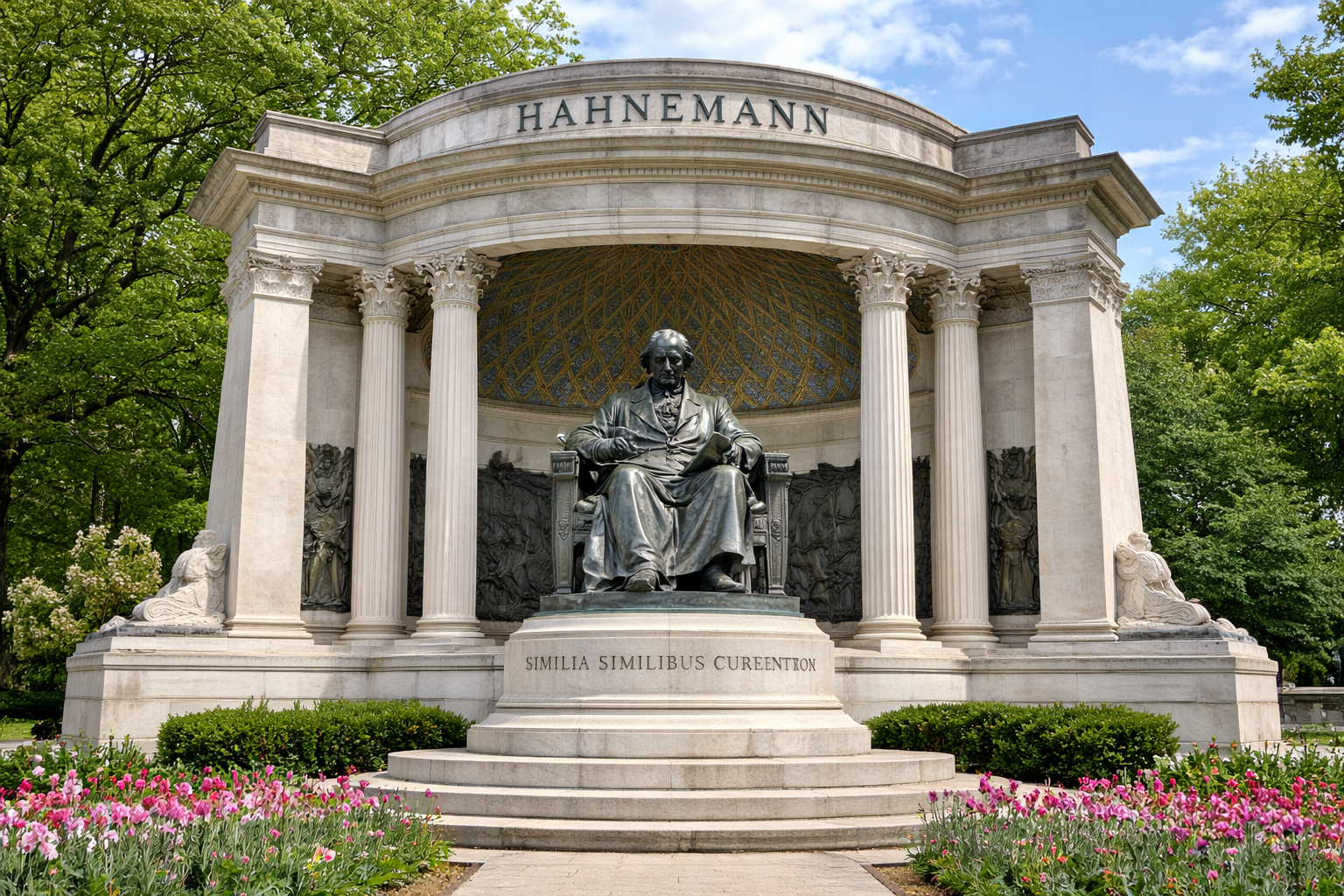
The monument was designed as a classical statue, reflecting artistic conventions of the late nineteenth century. Hahnemann is depicted in dignified attire, holding a book that symbolizes knowledge and scholarship. His posture conveys calm authority rather than dramatic flair, aligning with the homeopathic emphasis on restraint and balance.
The statue rests on a substantial granite pedestal, inscribed with his name and dates. The simplicity of the design avoids excessive ornamentation, allowing the figure itself to convey meaning. This restrained aesthetic reinforces the intellectual seriousness of the subject.
Symbolism in Design
Every aspect of the monument carries symbolic weight. The book represents scientific inquiry, while the composed stance suggests rational contemplation. The choice of durable materials, such as bronze and granite, reflects an intention for permanence, signaling confidence in the lasting relevance of Hahnemann’s ideas.
The overall design places the monument firmly within the tradition of American civic sculpture, visually aligning it with memorials dedicated to political leaders, military figures, and cultural icons.
Location and Urban Significance
Placement in Washington, D.C.
The monument stands near Scott Circle, a prominent traffic circle in northwest Washington, D.C.. Its location ensures visibility while integrating the structure into the city’s broader monumental landscape. Though not as frequently visited as the National Mall, the site still places the statue within the symbolic geography of national memory.
Urban Context
Scott Circle is surrounded by historic buildings, embassies, and institutions, creating a setting that underscores intellectual and diplomatic exchange. In this environment, the monument functions as a quiet reminder of medical pluralism and the debates that once shaped public health policy.
Its presence in a busy urban space also invites casual encounters. Passersby may notice the statue without prior knowledge, prompting curiosity and further exploration of its significance.
Cultural and Medical Impact
Recognition of Medical Diversity
The hahnemann monument stands as a rare public acknowledgment of medical diversity in American history. Unlike monuments dedicated to universally accepted figures, it commemorates a philosophy that has remained controversial. This aspect makes it particularly valuable as a cultural artifact, representing open discourse rather than consensus.
The monument reflects a time when the boundaries between mainstream and alternative medicine were more fluid. It reminds modern audiences that medical practice has always evolved through debate, experimentation, and competing ideas.
Influence on Professional Identity
For homeopathic practitioners, the monument has long served as a symbol of professional identity and historical legitimacy. It affirms that their discipline once played a significant role in shaping healthcare institutions and public attitudes.
At the same time, the monument invites critical reflection. As medical science has advanced, many of Hahnemann’s theories have been challenged or rejected. The statue does not resolve these debates but instead preserves their historical context.
Public Perception Over Time
Changing Attitudes Toward Homeopathy
Public attitudes toward homeopathy have shifted dramatically since the monument’s dedication. Once considered a progressive alternative, it is now often viewed skeptically by the scientific community. Despite this shift, the monument remains intact, highlighting a broader commitment to historical preservation rather than ideological endorsement.
This endurance suggests that monuments can outlive the ideas they represent, transforming from symbols of advocacy into markers of historical inquiry.
Educational Value
Today, the hahnemann monument serves an educational function. Historians, students, and visitors interested in the history of medicine can use it as a starting point for discussions about how healthcare systems develop and change. It provides a tangible link to a period when medical authority was contested and innovation flourished.
Preservation and Contemporary Relevance
Conservation Efforts
Maintaining the monument requires ongoing conservation to protect it from weathering and urban pollution. Preservation efforts reflect a broader commitment to safeguarding historical artifacts, regardless of contemporary opinions about the ideas they commemorate.
Such efforts ensure that future generations can engage with the monument as a primary historical source rather than relying solely on written records.
Role in Modern Discourse
In an era of renewed interest in alternative and integrative medicine, the monument has gained renewed relevance. It offers a historical framework for understanding why patients seek alternatives and how medical authority is negotiated within society.
Rather than promoting a specific treatment, the monument encourages thoughtful examination of medical history, professional ethics, and public trust.
Conclusion
The hahnemann monument occupies a distinctive place in the American commemorative landscape. It is neither a relic of unquestioned heroism nor a mere decorative sculpture. Instead, it stands as a complex historical marker, reflecting the ambitions, debates, and cultural values of the era in which it was created.
By honoring Samuel Hahnemann, the monument captures a moment when alternative medical ideas commanded significant respect and institutional support. Its continued presence in Washington underscores the importance of remembering not only triumphant narratives but also contested ones. As such, the monument remains a valuable educational and cultural resource, inviting ongoing reflection on how societies evaluate knowledge, authority, and progress over time.